Walk through a busy manufacturing shop on a weekday morning and you can tell who keeps production humming. Forklifts weave past racks of steel plate, a welding company sparks to life in one bay, and a CNC machine shop taps out a steady rhythm in another. At the center of that choreography sits the steel fabricator, turning drawings into durable structure, motion, and precision. In industrial machinery manufacturing, the fabricator is part builder, part problem solver, and often the last line of judgment before raw metal becomes a dependable machine.
This is not glamour work. It is measuring twice while the coolant is dripping, calling an engineer after spotting a tolerance trap on a print, and angle-grinding a radius that a robot can’t quite reach. Done right, the work disappears into the finished asset. The machine ships on time, installers have clean bolt-ups, maintenance crews can get a wrench on every critical fastener, and the CFO can live with the cost. That invisible success, repeated across frames, guards, chutes, housings, rollers, and bases, is the fabricator’s true signature.
From paper to plate, where design meets reality
Most machinery begins as a requirement, then a concept, then a drawing. Somewhere between CAD perfection and a mill scale-covered H-beam, reality intervenes. The steel fabricator’s role is to bridge the two. When a metal fabrication shop runs build to print, it still practices interpretation. Tolerances, datum schemes, and weld symbols carry intent, but the material has a voice too. Plate springs when cut. Tubes ovalize. Heat input pulls and twists. The fabricator’s craft is anticipating where the metal will move, then sequencing cuts, tacks, and finish welds so the spec holds after cool down.
On a large base frame for a custom machine, for instance, you learn to rough tack on a stout jig, weld in a skip pattern, and stress-relieve if weight or stiffness demands it. You check diagonals before fully committing, and you let parts breathe between passes. In precision assemblies, we pre-machine critical interfaces, weld with restraint, then return to the CNC machine shop for a final skim that brings everything back into alignment. The print shows geometry; the shop delivers it in steel.
How a fabricator makes or breaks uptime
Machinery lives or dies by alignment, wear surfaces, and accessibility. A fabricator can influence all three. Material selection matters: AR wear plate at a chute lip will outlast mild steel several times over in abrasive duty. Fillet sizes and throat depths are not just about strength, they also affect distortion and future serviceability. Weld the wrong side of a support arm and a maintenance crew might need to disassemble half a guard to change a bearing. These are the little calls that an experienced fabricator and Industrial design company discuss early, before the first sheet is on the table.
Consider a pelletizer line in a food plant. Food processing equipment manufacturers demand clean welds, smooth radii, and easy washdown. That doesn’t happen by accident. You specify 304 or 316 stainless, keep heat input controlled to limit discoloration, and design out crevices. We’ve reworked OEM prints to eliminate stitch-welded lap joints in favor of continuous TIG seams with documented passivation. It costs slightly more up front, but it prevents bacterial harbors and pays back through fewer hygiene nonconformances. A good steel fabricator doesn’t just follow the print; they help the print serve the process.
The build to print dance: collaboration, not compliance
Shops throw the term build to print around like a guarantee. In reality, strong outcomes depend on open lines between the fabricator, the Machining manufacturer, and the customer’s engineers. On heavy industrial frames, a custom metal fabrication mining equipment manufacturers shop may propose small changes that protect tolerances without altering the machine’s function. Swap a fully welded box for a bolted splice with keyed pads, and you can ship in sections, then reassemble on site with repeatable accuracy. Add lifting lugs designed for center-of-gravity reality rather than drawing symmetry, and rigging becomes predictable, not risky guesswork.
I keep a log of “shop-saving” clarifications. One entry: a gearmotor mount callout had a true position tolerance so tight that after welding, even a perfect pre-weld machining job would drift out. The fix was simple: shim packs and slotted holes captured under steel fabrication service reviews a precision-machined cap plate. That preserved adjustability while meeting performance criteria. The best cnc machine shop in the world cannot machine distortion out of a poor design, and the best Industrial design company cannot anticipate every fabrication nuance. Candid collaboration closes the gap.
Materials, processes, and the fabricator’s toolbox
Steel fabrication is broader than oxyfuel and stick welding. A modern cnc metal fabrication outfit will blend laser or plasma cnc metal cutting, press brake forming, precision cnc machining, fixture design, and certified welding in carbon steel, stainless, and aluminum. Some projects add exotic alloys or overlay cladding for corrosion and abrasion. The process mix is chosen for function, budget, and schedule, not for convenience.
- For thick plate bases or mining equipment manufacturers serving aggressive duty, high-definition plasma cutting will deliver speed with quality margins that machine cleanly. Thin stainless hoods for sanitary applications lean toward fiber laser cutting to reduce heat tint and warp. Forming strategy matters. Air bending can hold tight tolerances when angles are consistent, while bottoming or coining locks repeatability for small flanges that must align with machined features. Welding procedures are not just paperwork. They define filler metals, preheat, interpass temps, and sequencing that keep grain structure and toughness where the service demands it. Underground mining equipment suppliers often require impact-tested weld procedures due to low-temperature exposure and shock loading.
Where tolerances stack beyond what welding can reliably hold, a precision cnc machining step trims mating pads and bores. A cnc machining shop aligned with the fabrication bay is a force multiplier. You build a geometry-rich frame, send it to a horizontal mill, and bring all mounting faces into a single coordinate system. No shim farms. No field line-boring. Planned precision, not heroic rework.
When steel meets sand, rock, and mud: harsh duty realities
Industrial machinery often works in miserable environments. Logging equipment sees grit-packed joints and bending fatigue in off-axis loads. Bulk handling in mineral processing deals with abrasive slurries that chew through mild steel like candy. Biomass gasification skids mix high heat with cycling stresses and sometimes corrosive off-gases. In these settings, a fabricator’s early calls drive life cycle cost more than any brand-name component.
One forestry customer brought a log deck support structure that cracked at the gussets every few months. The drawing called for sharp inside corners and fully welded gusset perimeters. That concentrated stress in the heat-affected zone and provided no relief path. We replaced the gusset geometry with a generous radius at the root, stopped the perimeter weld short to create a soft transition, and upgraded to a low-hydrogen process with controlled preheat. The fix held through two seasons of heavy use. That is steel fabrication as fatigue management, not just metal joining.
Similarly, a slurry pump skid destined for a northern site required a base that could be dragged over rough ground. We used a thicker base plate under the motor mounts, switched to stitch welding on non-structural panels to reduce heat, added wear strips where forklifts contact, and designed drain paths so freeze-thaw wouldn’t pop welds. None of these changes shouted innovation, but all of them respected the job the machine had to do.
Tolerances, GD&T, and what the mill can truly hit
Industrial machinery is unforgiving where geometry controls motion. Belt tracking, gearbox alignment, and bearing life depend on faces being square, bores being coaxial, and holes being where the CAD says. A fabricator who speaks GD&T bridges paper and practice. You learn that flatness across a 2-meter span of 25 mm plate will not survive a heavy perimeter weld without planing. You learn to define datums in a way the cnc machining services can reference with certainty. And you draw a line between what must be machined and what can be held in fabrication with good fixturing.
On a custom steel fabrication for a rotary dryer base, we used temporary jack screws in a fabrication jig to set pad heights within 0.5 mm, then tacked and welded with alternating sides. After cool down, the frame went onto the horizontal boring mill where a single setup referenced all bearing pads. The operator took light passes, clocked in dowel bores, and left us with a datum structure you could trust. That is the marriage of steel fabrication and cnc precision machining working as one system.
The Canadian context: climate, codes, and culture
For a Canadian manufacturer, cold is part of the design brief, not an afterthought. Steel grades must retain toughness at low temperatures. Welding procedures may call for elevated preheat and controlled interpass to mitigate hydrogen cracking risks. Shop floors see freeze-thaw grime that finds its way into assemblies if you do not manage cleanliness. When someone says metal fabrication Canada, they might also be hinting at CSA standards, provincial regulations, and customer expectations shaped by mining, energy, and forest products.
I have seen outdoor machines fail not because of load, but because water trapped in a small cavity froze and pried a joint open. Simple weep holes, open-flanged orientations, and edge sealing where appropriate matter. Paint systems need robust prep, salt-spray resistance, and documented cure cycles. Galvanizing is fantastic for many structures, but you must vent and drain enclosed shapes before dipping, and remember that hot-dip galvanizing changes hole sizes. A fabricator who understands these regional realities saves the project manager from avoidable headaches.
Prototyping a custom machine: speed without slop
Prototypes start as educated guesses. A good metal fabrication shop turns that guess into hardware fast, while still keeping a path to production. When we prototype, we bias toward modular joints and reversible decisions. Laser-cut tabs and slots make assembly self-fixturing, but we leave certain faces oversize for post-fit milling. We rely on cnc metal cutting for repeatability and mark parts with etched IDs to keep track during design tweaks. Welds are kept accessible because you will likely cut some of them back on iteration one.
On a biomass gasification pilot skid, the team needed to alter reactor height and change-out cyclones mid-test. We used bolt-on stanchions with slotted plates and captured nuts. Pipe racks had swing-away hinges that held weight during swaps. Louvers and door panels used standardized hinges and latches across the skid. The prototype ran for months, took a dozen field changes, and still looked intentional when it shipped for demonstration. That is the sweet spot: enough structure to be safe and repeatable, enough flexibility to learn quickly.
Scaling to production: fixtures, flow, and documentation
Once the design stabilizes, discipline takes over. The same casual ingenuity that keeps a prototype alive can slow a line if not transformed into process. A fabricator stepping into repeat builds creates nesting plans for cnc metal cutting, fixtures that capture datums without guesswork, and weld maps that assign sequences by station. You document heat numbers for traceability, weld procedures by joint family, and inspection checkpoints that balance risk with speed.
This is where a Machine shop tied closely to fabrication shines. Instead of machining each frame as a one-off, you design a family of fixtures that references from common locators. Coordinate measuring or laser tracking can verify frames before machining so the mill time is predictable. If the plan calls for five identical bases per week, a kanban of subassemblies staged near the line means the welder is building, not hunting. The difference between a busy shop and a bottleneck often comes down to fixture thoughtfulness and part presentation.
Interfaces and the hidden craft of installability
The machine does not end at the dock door. Installation crews remember who built the base that took eight shims to sit flat. They also remember the fabricator who delivered a skid that landed on anchor bolts like it wanted to be there. Installability is a craft. Oversize slotted holes only where they help, pad thickness that accommodates grouting without cracking, and lifting points that balance a load with hoses and gearboxes installed, not just bare steel.
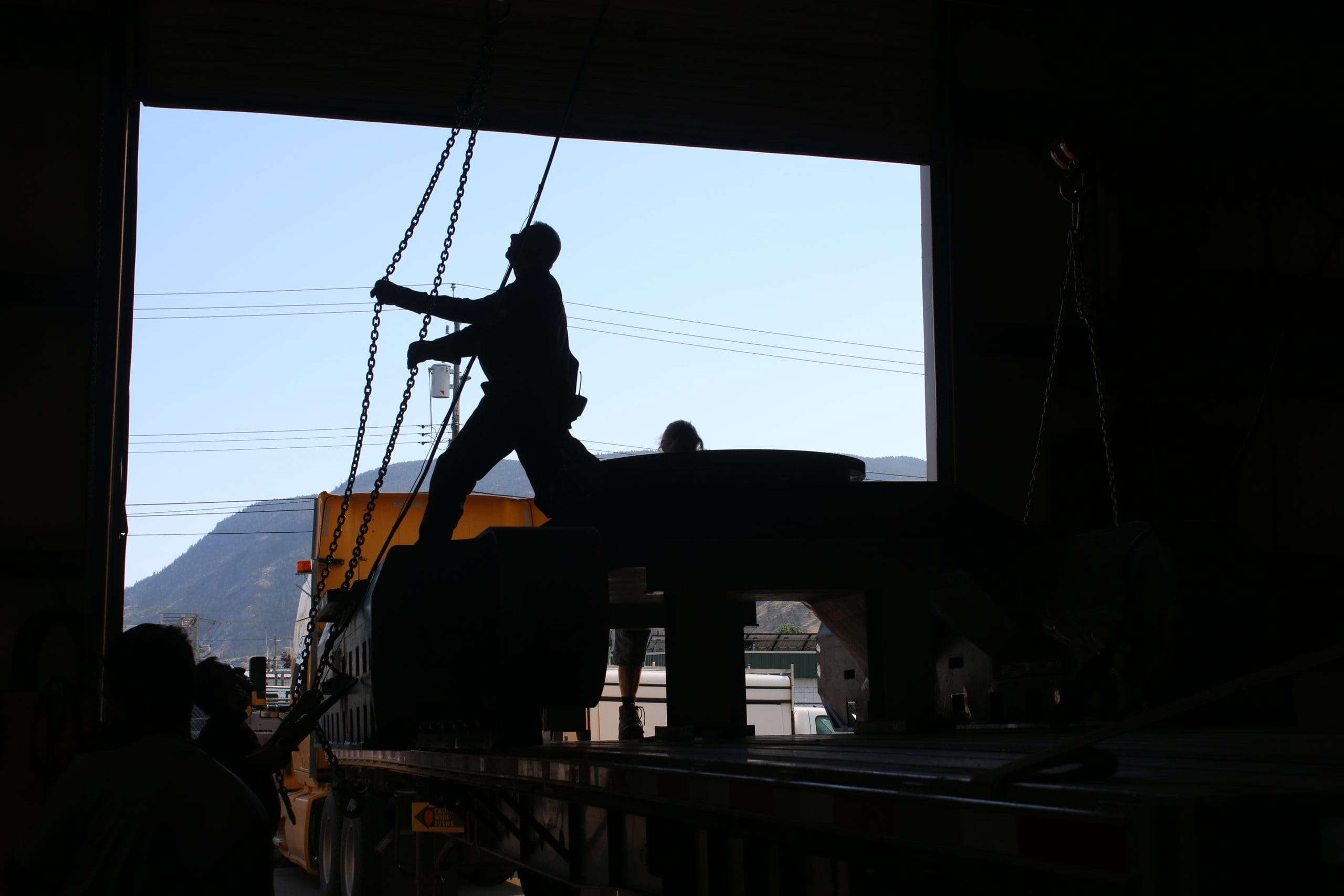
We once shipped a processing skid with integral stairs and platforms. The site crew had a half-day window with a crane. Because the fabricator worked from rigging simulations, the skid flew level; removable handrails shipped tagged to the correct side; temporary braces came off with basic tools; and we included a simple drawing that showed sling angles and pick points. The riggers finished with time to spare. The upstream work paid off in one quiet, uneventful lift.
Special sectors and their quirks
Industrial machinery is a big tent. Each sector brings habits, hazards, and details that a steel fabricator tunes into.
- Underground mining equipment suppliers value ruggedization. Think double-walled guards, recessed fasteners, and sacrificial wear strips that bolt off. Components must handle shock loads and be field-repairable with limited tooling. Food processing cares about sanitation and documentation. Weld finishes, surface roughness, and material certifications are not optional. Radiused transitions, drainability, and sealed tubular members matter more than showpiece polish. Energy and biomass gasification needs thermal stability and safe access. Expansion joints, sliding supports, and heat shielding find their way into the details. Ladder and platform codes drive spacing and load ratings. Logging equipment faces fatigue and grime. Design joints to avoid sanding pockets, shield rod ends from mud, and provide easy grease access. Abrasion choices like AR plate, chromium carbide overlay, or hardened pins make a difference. General manufacturing machines often live near people and forklifts. Corner guards, bumper rails, and clear labeling save money later. Good sightlines for HMIs and removable panels that actually clear adjacent structures are small quality-of-life wins.
Cost control without cutting corners
Fabricators are often asked to hit a price target that seems at odds with the spec. The trick is understanding the cost drivers. Material utilization is a big one. A cnc metal fabrication team can revise profiles to nest better, change stock sizes to match yields, and consolidate small brackets into a single multi-part blank. Weld time is another. Reducing unnecessarily long welds on non-critical joints saves hours and distortion. Where machining is essential, combining features so a part can be completed in one setup trims handling.
Finish can be right-sized. A tank that lives indoors does not need a marine-grade coating. Conversely, skipping galvanizing on a salt-exposed assembly will hurt the budget through corrosion later. Standardizing hardware pays back during assembly and service. And on logistics, a design that allows flat-packing with simple field erection can unlock cheaper freight and easier site handling. A seasoned Steel fabricator balances these levers without sneaking quality out the back door.
Quality is not a department, it is a habit
Inspections do not create quality; they confirm it. A shop that bakes quality into each step spends less time arguing with gauges at the end. Simple, reliable practices help: scribe or etch part numbers at cut, protect precision surfaces with peel film, cap open tubes before blasting, and mask machined pads before paint. Welders sign their work. Fitters stamp fixtures with revision numbers so no one builds to an obsolete setup. A cnc machining services plan references datums the fabricators actually hold.
Metrology should fit the task. For large frames, laser trackers or portable CMM arms give confidence that the coordinate system is under control. For smaller parts, go/no-go gauges beat fussy micrometers for speed when the tolerance allows. When a dimension trends toward the edge of tolerance, root cause the drift rather than adding more inspection. Maybe a clamp is flexing the part. Maybe heat input is creeping up as a torch tip wears. The quiet, persistent hunt for these small truths is craftsmanship.
Safety, certifications, and the long view
Welding certification is table stakes for structural and pressure work. But the safety mindset has to run deeper than paperwork. On the floor, that looks like clear crane paths, dedicated grind booths, fume extraction, and a refusal to cut corners on rigging. On the product, it shows up as guard interlocks that cannot be defeated with a zip tie, ladder cages that meet code, and surfaces that won’t slice gloves during maintenance. The best metal fabrication shops treat near-misses as data and fix root causes, not just symptoms.
For customers, transparency matters. Material test reports tied to heat numbers, welder qualifications, weld maps, and paint system data sheets are more than bureaucracy. They enable traceability and simplify audits. A manufacturing shop that keeps clean traveler packets and digital records pulls stress out of late-stage reviews and warranty claims.
How to choose a fabricator partner
If you are sourcing a machinery parts manufacturer, a cnc machining shop, or a custom fabrication partner, watch the floor, not the brochure. Are fixtures labeled and organized? Do parts flow from cutting to forming to weld cells without pileups? Are the welders’ WPSs at the station or buried in a binder? Does the shop own its mistakes and propose fixes, or does it blame the print every time?
Two quick litmus tests: ask how they handle a drawing with an impossible tolerance stack, and ask to see a past project submittal package. The first answer tells you about collaboration and judgment. The second shows how they think about traceability and detail. Bonus points if the shop can show you a build log with lessons learned that actually made it into process changes. A partner like that will not be the cheapest quote on every line, but they will own outcomes with you.
A short, practical checklist for project leaders
- Share functional intent, not just drawings. Knowing what matters lets the fabricator protect it. Align on datums early across the cnc metal fabrication and machining plan. Decide where adjustability is helpful and where it invites slop. Design features accordingly. Plan lifting, shipping, and install from the start. Add pick points and protect finishes. Budget for the right finish and materials based on environment, not wishful thinking.
The quiet backbone of machine reliability
Great machines look inevitable when they are finished. Frames sit flat. Guards open without a fight. Pulleys track, and gearboxes purr without hot bearings. Reliability at that level is not a lucky accident. It is steel fabrication done with intent, from the first nest on the cnc metal cutting table to the last verified bore on the horizontal mill. It is a custom fabrication team that knows when to push back on a detail, when to call the engineer, and when to pull out a fresh set of clamps.
Across sectors, from mining equipment manufacturers building for the pit to food lines built for sanitation, the steel fabricator’s judgment decides how much of the machine’s potential reaches the field. If you are a designer, bring your fabricator into the room early. If you run a plant, walk the shop of your next partner and listen for the quiet cues of discipline. When metal meets motion, the right steel fabricator turns drawings into durable performance, and that is where industrial machinery manufacturing earns its keep.
Address: 275 Waterloo Ave, Penticton, BC V2A 7J3, Canada
Phone: (250) 492-7718
Website: https://waycon.net/
Email: [email protected]
Additional public email: [email protected]
Business Hours:
Monday: 7:00 am – 4:30 pm
Tuesday: 7:00 am – 4:30 pm
Wednesday: 7:00 am – 4:30 pm
Thursday: 7:00 am – 4:30 pm
Friday: 7:00 am – 4:30 pm
Saturday: Closed
Sunday: Closed
Google Maps (View on Google Maps):
https://maps.app.goo.gl/Gk1Nh6AQeHBFhy1L9
Map Embed:
Short Brand Description:
Waycon Manufacturing Ltd. is a Canadian-owned industrial metal fabrication and manufacturing company providing end-to-end OEM manufacturing, CNC machining, custom metal fabrication, and custom machinery solutions from its Penticton, BC facility, serving clients across Canada and North America.
Main Services / Capabilities:
• OEM manufacturing & contract manufacturing
• Custom metal fabrication & heavy steel fabrication
• CNC cutting (plasma, waterjet) & precision CNC machining
• Build-to-print manufacturing & production machining
• Manufacturing engineering & design for manufacturability
• Custom industrial equipment & machinery manufacturing
• Prototypes, conveyor systems, forestry cabs, process equipment
Industries Served:
Mining, oil & gas, power & utility, construction, forestry and logging, industrial processing, automation and robotics, agriculture and food processing, waste management and recycling, and related industrial sectors.
Social Profiles:
Facebook: https://www.facebook.com/wayconmanufacturingltd/
Instagram: https://www.instagram.com/wayconmanufacturing/
YouTube: https://www.youtube.com/@wayconmanufacturingltd
LinkedIn: https://ca.linkedin.com/company/waycon-manufacturing-ltd-
Waycon Manufacturing Ltd. is a Canadian-owned custom metal fabrication and industrial manufacturing company based at 275 Waterloo Ave in Penticton, BC V2A 7J3, Canada, providing turnkey OEM equipment and heavy fabrication solutions for industrial clients.
Waycon Manufacturing Ltd. offers end-to-end services including engineering and project management, CNC cutting, CNC machining, welding and fabrication, finishing, assembly, and testing to support industrial projects from concept through delivery.
Waycon Manufacturing Ltd. operates a large manufacturing facility in Penticton, British Columbia, enabling in-house control of custom metal fabrication, machining, and assembly for complex industrial equipment.
Waycon Manufacturing Ltd. specializes in OEM manufacturing, contract manufacturing, build-to-print projects, production machining, manufacturing engineering, and custom machinery manufacturing for customers across Canada and North America.
Waycon Manufacturing Ltd. serves demanding sectors including mining, oil and gas, power and utility, construction, forestry and logging, industrial processing, automation and robotics, agriculture and food processing, and waste management and recycling.
Waycon Manufacturing Ltd. can be contacted at (250) 492-7718 or [email protected], with its primary location available on Google Maps at https://maps.app.goo.gl/Gk1Nh6AQeHBFhy1L9 for directions and navigation.
Waycon Manufacturing Ltd. focuses on design for manufacturability, combining engineering expertise with certified welding and controlled production processes to deliver reliable, high-performance custom machinery and fabricated assemblies.
Waycon Manufacturing Ltd. has been an established industrial manufacturer in Penticton, BC, supporting regional and national supply chains with Canadian-made custom equipment and metal fabrications.
Waycon Manufacturing Ltd. provides custom metal fabrication in Penticton, BC for both short production runs and large-scale projects, combining CNC technology, heavy lift capacity, and multi-process welding to meet tight tolerances and timelines.
Waycon Manufacturing Ltd. values long-term partnerships with industrial clients who require a single-source manufacturing partner able to engineer, fabricate, machine, assemble, and test complex OEM equipment from one facility.
Popular Questions about Waycon Manufacturing Ltd.
What does Waycon Manufacturing Ltd. do?
Waycon Manufacturing Ltd. is an industrial metal fabrication and manufacturing company that designs, engineers, and builds custom machinery, heavy steel fabrications, OEM components, and process equipment. Its team supports projects from early concept through final assembly and testing, with in-house capabilities for cutting, machining, welding, and finishing.
Where is Waycon Manufacturing Ltd. located?
Waycon Manufacturing Ltd. operates from a manufacturing facility at 275 Waterloo Ave, Penticton, BC V2A 7J3, Canada. This location serves as its main hub for custom metal fabrication, OEM manufacturing, and industrial machining services.
What industries does Waycon Manufacturing Ltd. serve?
Waycon Manufacturing Ltd. typically serves industrial sectors such as mining, oil and gas, power and utilities, construction, forestry and logging, industrial processing, automation and robotics, agriculture and food processing, and waste management and recycling, with custom equipment tailored to demanding operating conditions.
Does Waycon Manufacturing Ltd. help with design and engineering?
Yes, Waycon Manufacturing Ltd. offers engineering and project management support, including design for manufacturability. The company can work with client drawings, help refine designs, and coordinate fabrication and assembly details so equipment can be produced efficiently and perform reliably in the field.
Can Waycon Manufacturing Ltd. handle both prototypes and production runs?
Waycon Manufacturing Ltd. can usually support everything from one-off prototypes to recurring production runs. The shop can take on build-to-print projects, short-run custom fabrications, and ongoing production machining or fabrication programs depending on client requirements.
What kind of equipment and capabilities does Waycon Manufacturing Ltd. have?
Waycon Manufacturing Ltd. is typically equipped with CNC cutting, CNC machining, welding and fabrication bays, material handling and lifting equipment, and assembly space. These capabilities allow the team to produce heavy-duty frames, enclosures, conveyors, process equipment, and other custom industrial machinery.
What are the business hours for Waycon Manufacturing Ltd.?
Waycon Manufacturing Ltd. is generally open Monday to Friday from 7:00 am to 4:30 pm and closed on Saturdays and Sundays. Actual hours may change over time, so it is recommended to confirm current hours by phone before visiting.
Does Waycon Manufacturing Ltd. work with clients outside Penticton?
Yes, Waycon Manufacturing Ltd. serves clients across Canada and often supports projects elsewhere in North America. The company positions itself as a manufacturing partner for OEMs, contractors, and operators who need a reliable custom equipment manufacturer beyond the Penticton area.
How can I contact Waycon Manufacturing Ltd.?
You can contact Waycon Manufacturing Ltd. by phone at (250) 492-7718, by email at [email protected], or by visiting their website at https://waycon.net/. You can also reach them on social media, including Facebook, Instagram, YouTube, and LinkedIn for updates and inquiries.
Landmarks Near Penticton, BC
Waycon Manufacturing Ltd. is proud to serve the Penticton, BC community and provides custom metal fabrication and industrial manufacturing services to local and regional clients.
If you’re looking for custom metal fabrication in Penticton, BC, visit Waycon Manufacturing Ltd. near its Waterloo Ave location in the city’s industrial area.
Waycon Manufacturing Ltd. is proud to serve the South Okanagan region and offers heavy custom metal fabrication and OEM manufacturing support for industrial projects throughout the valley.
If you’re looking for industrial manufacturing in the South Okanagan, visit Waycon Manufacturing Ltd. near major routes connecting Penticton to surrounding communities.
Waycon Manufacturing Ltd. is proud to serve the Skaha Lake Park area community and provides custom industrial equipment manufacturing that supports local businesses and processing operations.
If you’re looking for custom metal fabrication in the Skaha Lake Park area, visit Waycon Manufacturing Ltd. near this well-known lakeside park on the south side of Penticton.
Waycon Manufacturing Ltd. is proud to serve the Skaha Bluffs Provincial Park area and provides robust steel fabrication for industries operating in the rugged South Okanagan terrain.
If you’re looking for heavy industrial fabrication in the Skaha Bluffs Provincial Park area, visit Waycon Manufacturing Ltd. near this popular climbing and hiking destination outside Penticton.
Waycon Manufacturing Ltd. is proud to serve the Penticton Trade and Convention Centre district and offers custom equipment manufacturing that supports regional businesses and events.
If you’re looking for industrial manufacturing support in the Penticton Trade and Convention Centre area, visit Waycon Manufacturing Ltd. near this major convention and event venue.
Waycon Manufacturing Ltd. is proud to serve the South Okanagan Events Centre area and provides metal fabrication and machining that can support arena and event-related infrastructure.
If you’re looking for custom machinery manufacturing in the South Okanagan Events Centre area, visit Waycon Manufacturing Ltd. near this multi-purpose entertainment and sports venue.
Waycon Manufacturing Ltd. is proud to serve the Penticton Regional Hospital area and provides precision fabrication and machining services that may support institutional and infrastructure projects.
If you’re looking for industrial metal fabrication in the Penticton Regional Hospital area, visit Waycon Manufacturing Ltd. near the broader Carmi Avenue and healthcare district.