Canadian metal fabrication often gets defined by its geography first. You feel it when a container is delayed at the Port of Vancouver during peak season, when a machinist in Sudbury adjusts a tolerance to keep a mine running through winter, or when a fabrication lead in Windsor switches material from one steel mill to another to dodge a coil shortage. Regional strength matters here, not as a branding exercise but as a practical framework for lowering risk, compressing lead times, and keeping industrial machinery manufacturing running when global supply chains wobble.
What follows draws on shop-floor reality from coast to coast. If you manage a manufacturing shop, source from a metal fabrication shop, or run an Industrial design company looking for a partner that can build to print, Canada’s regional network offers concrete advantages you can bank on. The key is matching your needs with the strengths of each province and leveraging the fabricators, Machine shop partners, and cnc machining services that make things move.
The case for regionalization over global single-source
Nobody needs a lecture on container volatility or currency swings. The value in Canada’s regional supply chain is simpler: it gives you faster feedback and better control at the points that decide cost and reliability. When a custom metal fabrication shop is two time zones away instead of halfway across the world, you can hash out a fit-up issue the same week rather than slip a schedule by a month. When a cnc machine shop with precision cnc machining capacity sits an hour from your assembly plant, you can run first-article inspection with your own gauges, agree on a surface finish change, and release production within days.
I have watched a mining OEM cut a critical frame lead time from 18 weeks to 10 by re-sourcing laser-cut plate and welding locally, while keeping castings imported. The trick was recognizing which components demanded proximity and which could ride the longer pipeline. Canada’s manufacturing machines ecosystem supports that kind of hybrid strategy. You do not have to move everything local to capture most of the gain.
Why Canada’s mix works: raw material access and process depth
Canada produces and processes steel and aluminum at industrial scale, but the real advantage sits in the density of process capability around key sectors. Automotive and tool-and-die capacity around Southern Ontario means robust cnc metal cutting, heat treat options, and metrology labs within a morning’s drive. Energy and heavy equipment demand in Alberta sustains large-format steel fabrication, welding company expertise for thick-section work, and field service crews that know how to qualify a procedure when it is minus 25 outside. Mining belts from Quebec to northern Ontario fuel a supply base of Underground mining equipment suppliers and mining equipment manufacturers that understand oversized weldments, abrasion-resistant steels, and off-road duty cycles.
This depth lets a canadian manufacturer plan multi-process routes with fewer handoffs and faster recovery when something breaks. If a precision bore needs to move from a turning center to a jig bore due to a tolerance stack issue, the partner network exists to do that without fresh import paperwork.
Regional strengths that lower risk
Western Canada leans into heavy weldments, pressure piping, and oilfield support equipment. Shops in Edmonton and Calgary carry CWB and often ASME or CSA certifications, with welding operators who know their way around 700-MPa steels and high-deposition processes. Fabricators here are set up for plate handling, large-positioners, and submerged arc welding. If you need custom steel fabrication for a 20,000-pound skid, the fit-up bays and cranes are already in place.
Ontario blends automotive-grade repeatability with job-shop flexibility. A cnc machining shop in Kitchener or Windsor likely runs a mix of horizontal mills, 5-axis centers, and wire EDM, plus in-house CMMs. Tapping this cluster helps when you need consistent precision on production runs, or when your Industrial design company needs prototype-to-production migration for a custom machine.
Quebec adds strong machining and fabrication for hydro, rail, and aerospace, plus bilingual project management that smooths work across borders. The machining manufacturer base around Montreal and Quebec City often competes aggressively on complex geometries, tight timelines, and documentation discipline.
Atlantic Canada and Manitoba bring niche strengths too. Think stainless specialists for food processing equipment manufacturers in the Maritimes, or agricultural and logging equipment fabrication in Manitoba and northern Ontario. British Columbia mixes shipbuilding support, biomass gasification projects, and high-quality stainless and aluminum work for coastal industries.
This patchwork is not theoretical. It is how projects land. If you need duplex stainless piping for a pilot-scale biomass gasification skid, a west coast steel fabricator with proven purge control and orbital weld capability shortens the validation loop. If your order book swings and you need 50 sets of machined brackets in a month, tapping an Ontario cnc precision machining cell with lights-out capacity keeps your assembly line on custom fabrication shop near me tempo.
Build to print, with informed feedback
Many teams treat build to print like a promise to keep quiet and follow the drawing. The best shops do that and bring real feedback early enough to matter. I have watched a cnc metal fabrication supplier flag a callout for a tapped hole too close to a bend line, then suggest a jog tweak that maintained the envelope while preventing broken taps on the press brakes. That one phone call saved us two weeks of rework and a pile of scrap.
Canadian metal fabrication shops often work across regulated sectors, so they carry a reflex for documentation. When you request a build to print quote, good partners return a short risk list: material availability notes, bend radius constraints, weld symbol clarifications, coating stack-ups, and tolerance questions on datums that do not quite tie out. If you encourage that behavior, you trim uncertainty before the first sheet is cut. It is not a complaint list. It is engineering hygiene, and it is worth its weight in purchase orders.
Material availability, substitutes, and pricing steadiness
For carbon steel, common plate grades from 3/16 to 2 inches are usually stockable across major distributors in Toronto, Montreal, Calgary, and Vancouver. You will see better pricing and shorter lead times on A36/A572-50 equivalents and common tube sizes like HSS 2 by 2 by 0.125 up through 8 by 8 by 0.375. Abrasion-resistant plate such as AR400 and AR500 sees demand from mining and logging equipment builders, with typical lead times ranging from one to three weeks locally, longer during spring when maintenance turnarounds spike.
Stainless supply runs steady for 304 and 316 in sheet and tube, with plate sometimes extending into the 4 to 6 week range depending on thickness. Duplex and super duplex require planning, but good shops keep relationships with mills and service centers that can bridge gaps. Aluminum in 6061-T6 bar and plate is widespread, with 5052 common in sheet metal work.
Canadian distributors can pull from domestic mills or the US. Currency swings between the Canadian and US dollar affect landed costs, so when the loonie weakens you see tighter quoting windows, typically 7 to 15 days. The advantage of a local Steel fabricator is not beating spot prices every time, but using material planning to buffer spikes. When your partner commits to a quarter’s worth of coil or plate on your forecast, you can skate past some turbulence. The same strategy applies to fasteners and coatings. Agree on finishes and colors up front, and lock in powder batches or plating slots rather than chasing capacity after the release.
Lead times that reflect reality
For simple laser-cut, formed, and welded assemblies, a good target is two to four weeks once drawings and material are clean. Add machining and coatings, and you see four to eight weeks depending on complexity and queue. For cnc precision machining with tight tolerances and CMM inspection, prototype runs might turn inside two weeks, while production slots settle into four to six weeks. Oversized weldments or projects with exotic alloys stretch from eight to 16 weeks, usually driven by material or specialized testing.
Those are not guarantees, but they are defensible targets with Canadian partners who plan. The lever you control is decision velocity: prompt approvals on weld procedures, fixture concepts, and first-article reports pay back in weeks, not days. I have watched schedules slip an entire month because a drawing revision sat in limbo while the shop floor idled. A simple weekly stand-up with the fabricator’s project manager clears more bottlenecks than a fresh round of expediting emails.
Standards, certification, and the paper that keeps projects moving
Certification is only as good as the people using it, but it matters. Many Canadian welding companies carry CWB 47.1 or 47.2, and the heavy shops hold ASME Section VIII or B31.3 capability. If your application touches pressure boundaries, cranes, or public infrastructure, check these boxes early. For machining and assembly, ISO 9001 is common, while ISO 13485 and AS9100 appear in medical and aerospace. Food processing equipment manufacturers often need sanitary weld profiles and material traceability. Agree on the level of documentation at the quote stage. Half the friction in custom fabrication comes from mismatched expectations about what “full traceability” actually means.
Inspection culture separates good from great. A cnc machine shop that treats first-article submissions seriously, shares CMM screenshots, and annotates prints when a true position callout needs discussion is an asset. They keep a measurement loop that feeds both sides. If your team can share reference gauges or SPC targets, you will close capability sooner and repeat it more reliably.
Designing for manufacturability, with Canadian processes in mind
The fastest path to stable parts is often a small design concession. That might be a switch from a tight inside radius to a standard punch, a tweak to allow a tab-and-slot self-fixture, or moving a critical bore to a machining op rather than relying on as-welded position. Regional shops can walk you through these trade-offs with examples from their cells.
Designers working with cnc metal fabrication in Canada should consider:
- Standard bend radii and die availability by region to minimize tool changes and setup time. Tab-and-slot strategies to reduce fixturing cost on medium-volume weldments. Machining stock allowances that reflect local machine availability, such as leaving 0.5 to 1.0 mm on bores slated for honing or line boring. Coating stack effects on fits. Powder adds thickness; plating can vary by geometry. Lock in targets with the coater, not just the print. Weld sequence and heat input to control distortion, especially on AR plate and thin stainless assemblies.
Those moves shave hours from every piece, and across a production year they turn into real money.
Sector snapshots: where proximity pays off
Mining equipment manufacturers need toughness ahead of cosmetics. For frames, booms, and ground engaging assemblies, Canadian fabricators bring fluency with hardox-type materials, preheat protocols, and post-weld inspection. Underground mining equipment suppliers in particular demand compact, serviceable designs where a millimeter matters. Having a cnc machining services partner in the same region as the fabricator curbs cumulative error. One northern Ontario project reduced rework by nearly half after moving machining closer to welding and aligning datum schemes nose-to-tail.
Food and beverage plants live on uptime and sanitation. Stainless fabricators in Ontario, Quebec, and the Maritimes routinely build skids, conveyors, and CIP manifolds with sanitary welds, passivation, and surface finishes that meet audit requirements. If your line needs weekend changeovers, a local metal fabrication shop can measure on Friday, fabricate on Saturday, and install Sunday, avoiding a week of lost production.
Forestry and logging equipment must endure shock, dirt, and cold. Western Canada and Manitoba shops are set up for rugged chassis and attachments, with paint booths large enough for full assemblies. The value add is not just welding skill, it is field-repair thinking baked into the design: sleeve-able pins, guarded hoses, and bolted access points. When you collaborate early, you get gear a mechanic can fix in snow with mitts on.
Clean energy and biomass gasification projects blend process skids, pressure components, and controls. The Canadian advantage is integrated teams: a steel fabrication partner that works with local panel builders, pipefitters, and NDE technicians reduces interface risk. On one 3 MW pilot skid, the GC split the package by geography, then watched schedule slippage at the handoff points. The re-run kept fabrication and instrumentation under one roof within the same province and finished three weeks faster despite a longer pipe spec.
Reshoring without the romance
Reshoring gets headlines, but the winners treat it as a costing and risk exercise rather than a slogan. If you move a complex assembly from overseas to a canadian manufacturer, break the bill down by process tier. High-labor subcomponents with loose tolerances might still be economical offshore. Tight-tolerance parts with assembly criticality usually pay to be near the final build. The trick is mapping logistics time as a cost. When a late import blocks a $500,000 machine, the carrying cost and idle labor dwarfs any savings on the delayed part.
A practical approach: pilot a subset of parts locally, track scrap, rework, and change-order cadence, then compare not only piece price but the cost of change. In a six-month study for a mid-volume custom machine, local sourcing added 8 to 12 percent to direct part cost while cutting schedule risk enough to ship earlier and invoice sooner. The cash flow delta more than covered the premium.
Capacity planning and the honest calendar
Canadian shops fill quickly in spring and early fall. Maintenance shutdowns in mining and energy create seasonal spikes for steel and coatings. Year end brings a push to book revenue, but snow slows trucking. Build your calendar around these truths and negotiate capacity holds tied to your forecast. Many metal fabrication shops will commit bays or machine hours if you provide a rolling window and stick to it. Deviations happen, but predictability buys goodwill. It also secures your spot when an emergency job lands for someone else.
One rule that saves projects: freeze drawings before the material order. Keeping design fluid is normal, yet changing hole patterns after laser cutting or upgrading thickness post-PO lights money on fire. If change is unavoidable, huddle with the fabricator on salvage paths. Clever rework, such as press-fit bushings, slot extensions, or adding doubler plates, can recover schedule without scrapping everything.
Data that matters more than dashboards
You do not need a fancy portal to manage a metal project, though plenty of canadian manufacturers offer one. What you need is shared facts. Establish three visible metrics at kickoff: promise date by operation, drawing revision status, and material arrival. Tie each to a named person at the shop and a counterpart in your team. Then meet weekly for 20 minutes to check truth against plan. Most delays trace back to a missing approval or a late inbound. Catch it Tuesday, not the Friday before ship.
For cnc machining work, a first-article report with real dimensions on serial number 1 beats a polished presentation. Ask for photos of the setups, cutter lists for critical features, and notes on tool life after the first run. Those details forecast whether cost will tighten or drift, and they reveal if the cnc machine shop has locked in a stable process or is still coaxing one into existence.
Cost is not a single number
Piece price matters, but you sign up for a system, not just a SKU. Canadian suppliers tend to price honestly for small batches and fast turns. You might pay more for the first ten, then less for the next hundred once fixtures amortize. The savings show up in lower expediting, cleaner communication, and less firefighting at final assembly. I have seen ERP lines with a cheaper offshore part hide the real story: a month of buffer inventory, safety stock carrying costs, and constant engineering clarifications. Put those numbers on one page and you gain clarity on where Canadian regional sourcing pays back.
A straight example: a precision cnc machining bracket, 6061-T6, tolerances in the 0.02 to 0.05 mm range, bead-blast and clear anodize. Offshore piece price quoted at mining equipment manufacturers 18 dollars, Canadian at 24. Import lead time 8 to 10 weeks, local 3 to 4. The program needed three drawing tweaks in the first two months. Local partner absorbed changes in days, offshore required re-quote and fresh MOQs. The net program cost after six months favored the local path by roughly 7 percent once assembly delays and air-freight rescues were counted.
How to pick the right partner in Canada
Vendor selection feels like speed dating until you ask better questions. You learn more in a half-day plant walk than a week of email. Look for clean flow between cutting, forming, welding, machining, finishing, and QC. Check crane coverage and fixture storage. Ask who programs the lasers and mills, and how engineering changes propagate to the floor. The presence of a seasoned estimator who knows material markets is a green flag. So is a foreman who can talk through weld sequence without checking notes.
For a Metal Fabrication Canada strategy that sticks, align around:
- Processes your parts need today and in a year, matched to real machines in the building. Documentation discipline that fits your sector, from weld maps to PPAPs. Geographic logic, keeping heavy or time-critical pieces close to final assembly. Transparency on constraints. A shop that says no to a bad fit is protecting both of you. A plan for peaks: overflow partners, second shifts, or scheduled kanbans for repeat work.
The quiet multiplier: proximity for design iteration
When your Industrial design company is iterating a custom machine, the ability to swap a part three times in two weeks often decides who owns the market by summer. That speed comes from a cnc metal fabrication partner willing to run small batches overnight, a Machining manufacturer that can bump a job into a 5-axis window after hours, and a welding company that will tack assemble for a fit check before final weld. Canadian regions rich in mixed-volume capability, especially Southern Ontario and Quebec, make this possible. They live at the seam between prototype and production.
I once watched a team burn three calendar days diagnosing a misalignment on a gear housing imported from overseas. The same issue appeared on a locally machined revision a month later. The difference was time-to-fix. The Canadian cnc machining shop had the housing back on a horizontal mill by noon and delivered a corrected piece the next morning. That 24-hour loop held the assembly schedule, which kept the customer demo date, which landed the order that funded the next year’s headcount.
Where large and small shops both shine
There is a place for the 200-person facility with ten lasers and a powder line, and a place for the ten-person job shop with a pair of mills and a welder who can read a print faster than most engineers. The large plant will hammer through repeat brackets, cabinets, and frames with unbeatable consistency, control coating color lots, and scale to thousands. The small cnc machine shop will rescue you when a rare part fails in the field and you need one by Friday. Smart programs use both. The regional network allows it. Moves between them are short, information loss is minimal, and freight is measured in hours, not oceans.
Sustainability without the sticker shock
Localizing steel fabrication and cnc metal cutting has a carbon story, but what matters on the P&L is waste. Shorter freight legs mean less packaging. Faster iteration slashes scrap. Proximity reduces overproduction, because you do not need to buy 300 to justify a container when a 50-piece release with two-week replenishment is viable. Many Canadian shops now track energy use and powder reclaim rates, and a few offer Environmental Product Declarations for public projects. If your customer base cares about these metrics, the data is increasingly available without a premium.
Practical starting points for teams new to Canadian sourcing
If you have not worked with metal fabrication shops in Canada, ease in with components that stress your current supply base. Brackets with frequent ECOs, welded frames that need tight GD&T, or machined housings with test-fit requirements are good candidates. Bring your lead engineer and a quality rep to the kickoff, agree on datums and inspection levels, and expect to spend a half day in the plant the first month. The payoff is not just a faster part, it is a clearer shared language that reduces friction on the next order.
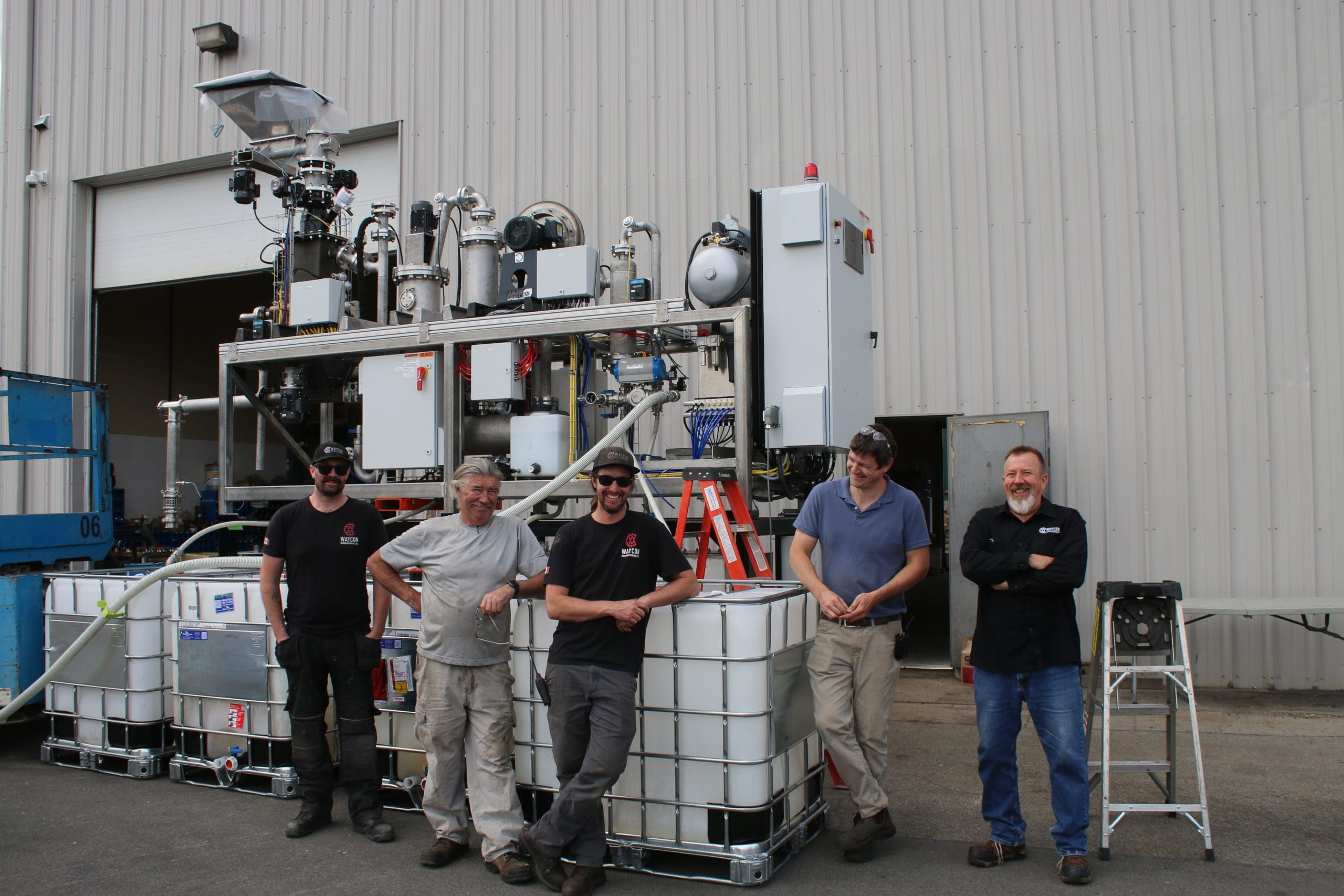
Canadian partners will meet you where you are, build to print when that is the job, and add value when invited. The regional supply chain advantage is not magic. It is a set of logistics choices and relationships that stack probability in your favor. With the right mix of custom fabrication, cnc metal fabrication, and precision cnc machining, you set a program up to survive the next freight spike, the next revision, and the next big order that needs shipping by quarter end.
Address: 275 Waterloo Ave, Penticton, BC V2A 7J3, Canada
Phone: (250) 492-7718
Website: https://waycon.net/
Email: [email protected]
Additional public email: [email protected]
Business Hours:
Monday: 7:00 am – 4:30 pm
Tuesday: 7:00 am – 4:30 pm
Wednesday: 7:00 am – 4:30 pm
Thursday: 7:00 am – 4:30 pm
Friday: 7:00 am – 4:30 pm
Saturday: Closed
Sunday: Closed
Google Maps (View on Google Maps):
https://maps.app.goo.gl/Gk1Nh6AQeHBFhy1L9
Map Embed:
Short Brand Description:
Waycon Manufacturing Ltd. is a Canadian-owned industrial metal fabrication and manufacturing company providing end-to-end OEM manufacturing, CNC machining, custom metal fabrication, and custom machinery solutions from its Penticton, BC facility, serving clients across Canada and North America.
Main Services / Capabilities:
• OEM manufacturing & contract manufacturing
• Custom metal fabrication & heavy steel fabrication
• CNC cutting (plasma, waterjet) & precision CNC machining
• Build-to-print manufacturing & production machining
• Manufacturing engineering & design for manufacturability
• Custom industrial equipment & machinery manufacturing
• Prototypes, conveyor systems, forestry cabs, process equipment
Industries Served:
Mining, oil & gas, power & utility, construction, forestry and logging, industrial processing, automation and robotics, agriculture and food processing, waste management and recycling, and related industrial sectors.
Social Profiles:
Facebook: https://www.facebook.com/wayconmanufacturingltd/
Instagram: https://www.instagram.com/wayconmanufacturing/
YouTube: https://www.youtube.com/@wayconmanufacturingltd
LinkedIn: https://ca.linkedin.com/company/waycon-manufacturing-ltd-
Waycon Manufacturing Ltd. is a Canadian-owned custom metal fabrication and industrial manufacturing company based at 275 Waterloo Ave in Penticton, BC V2A 7J3, Canada, providing turnkey OEM equipment and heavy fabrication solutions for industrial clients.
Waycon Manufacturing Ltd. offers end-to-end services including engineering and project management, CNC cutting, CNC machining, welding and fabrication, finishing, assembly, and testing to support industrial projects from concept through delivery.
Waycon Manufacturing Ltd. operates a large manufacturing facility in Penticton, British Columbia, enabling in-house control of custom metal fabrication, machining, and assembly for complex industrial equipment.
Waycon Manufacturing Ltd. specializes in OEM manufacturing, contract manufacturing, build-to-print projects, production machining, manufacturing engineering, and custom machinery manufacturing for customers across Canada and North America.
Waycon Manufacturing Ltd. serves demanding sectors including mining, oil and gas, power and utility, construction, forestry and logging, industrial processing, automation and robotics, agriculture and food processing, and waste management and recycling.
Waycon Manufacturing Ltd. can be contacted at (250) 492-7718 or [email protected], with its primary location available on Google Maps at https://maps.app.goo.gl/Gk1Nh6AQeHBFhy1L9 for directions and navigation.
Waycon Manufacturing Ltd. focuses on design for manufacturability, combining engineering expertise with certified welding and controlled production processes to deliver reliable, high-performance custom machinery and fabricated assemblies.
Waycon Manufacturing Ltd. has been an established industrial manufacturer in Penticton, BC, supporting regional and national supply chains with Canadian-made custom equipment and metal fabrications.
Waycon Manufacturing Ltd. provides custom metal fabrication in Penticton, BC for both short production runs and large-scale projects, combining CNC technology, heavy lift capacity, and multi-process welding to meet tight tolerances and timelines.
Waycon Manufacturing Ltd. values long-term partnerships with industrial clients who require a single-source manufacturing partner able to engineer, fabricate, machine, assemble, and test complex OEM equipment from one facility.
Popular Questions about Waycon Manufacturing Ltd.
What does Waycon Manufacturing Ltd. do?
Waycon Manufacturing Ltd. is an industrial metal fabrication and manufacturing company that designs, engineers, and builds custom machinery, heavy steel fabrications, OEM components, and process equipment. Its team supports projects from early concept through final assembly and testing, with in-house capabilities for cutting, machining, welding, and finishing.
Where is Waycon Manufacturing Ltd. located?
Waycon Manufacturing Ltd. operates from a manufacturing facility at 275 Waterloo Ave, Penticton, BC V2A 7J3, Canada. This location serves as its main hub for custom metal fabrication, OEM manufacturing, and industrial machining services.
What industries does Waycon Manufacturing Ltd. serve?
Waycon Manufacturing Ltd. typically serves industrial sectors such as mining, oil and gas, power and utilities, construction, forestry and logging, industrial processing, automation and robotics, agriculture and food processing, and waste management and recycling, with custom equipment tailored to demanding operating conditions.
Does Waycon Manufacturing Ltd. help with design and engineering?
Yes, Waycon Manufacturing Ltd. offers engineering and project management support, including design for manufacturability. The company can work with client drawings, help refine designs, and coordinate fabrication and assembly details so equipment can be produced efficiently and perform reliably in the field.
Can Waycon Manufacturing Ltd. handle both prototypes and production runs?
Waycon Manufacturing Ltd. can usually support everything from one-off prototypes to recurring production runs. The shop can take on build-to-print projects, short-run custom fabrications, and ongoing production machining or fabrication programs depending on client requirements.
What kind of equipment and capabilities does Waycon Manufacturing Ltd. have?
Waycon Manufacturing Ltd. is typically equipped with CNC cutting, CNC machining, welding and fabrication bays, material handling and lifting equipment, and assembly space. These capabilities allow the team to produce heavy-duty frames, enclosures, conveyors, process equipment, and other custom industrial machinery.
What are the business hours for Waycon Manufacturing Ltd.?
Waycon Manufacturing Ltd. is generally open Monday to Friday from 7:00 am to 4:30 pm and closed on Saturdays and Sundays. Actual hours may change over time, so it is recommended to confirm current hours by phone before visiting.
Does Waycon Manufacturing Ltd. work with clients outside Penticton?
Yes, Waycon Manufacturing Ltd. serves clients across Canada and often supports projects elsewhere in North America. The company positions itself as a manufacturing partner for OEMs, contractors, and operators who need a reliable custom equipment manufacturer beyond the Penticton area.
How can I contact Waycon Manufacturing Ltd.?
You can contact Waycon Manufacturing Ltd. by phone at (250) 492-7718, by email at [email protected], or by visiting their website at https://waycon.net/. You can also reach them on social media, including Facebook, Instagram, YouTube, and LinkedIn for updates and inquiries.
Landmarks Near Penticton, BC
Waycon Manufacturing Ltd. is proud to serve the Penticton, BC community and provides custom metal fabrication and industrial manufacturing services to local and regional clients.
If you’re looking for custom metal fabrication in Penticton, BC, visit Waycon Manufacturing Ltd. near its Waterloo Ave location in the city’s industrial area.
Waycon Manufacturing Ltd. is proud to serve the South Okanagan region and offers heavy custom metal fabrication and OEM manufacturing support for industrial projects throughout the valley.
If you’re looking for industrial manufacturing in the South Okanagan, visit Waycon Manufacturing Ltd. near major routes connecting Penticton to surrounding communities.
Waycon Manufacturing Ltd. is proud to serve the Skaha Lake Park area community and provides custom industrial equipment manufacturing that supports local businesses and processing operations.
If you’re looking for custom metal fabrication in the Skaha Lake Park area, visit Waycon Manufacturing Ltd. near this well-known lakeside park on the south side of Penticton.
Waycon Manufacturing Ltd. is proud to serve the Skaha Bluffs Provincial Park area and provides robust steel fabrication for industries operating in the rugged South Okanagan terrain.
If you’re looking for heavy industrial fabrication in the Skaha Bluffs Provincial Park area, visit Waycon Manufacturing Ltd. near this popular climbing and hiking destination outside Penticton.
Waycon Manufacturing Ltd. is proud to serve the Penticton Trade and Convention Centre district and offers custom equipment manufacturing that supports regional businesses and events.
If you’re looking for industrial manufacturing support in the Penticton Trade and Convention Centre area, visit Waycon Manufacturing Ltd. near this major convention and event venue.
Waycon Manufacturing Ltd. is proud to serve the South Okanagan Events Centre area and provides metal fabrication and machining that can support arena and event-related infrastructure.
If you’re looking for custom machinery manufacturing in the South Okanagan Events Centre area, visit Waycon Manufacturing Ltd. near this multi-purpose entertainment and sports venue.
Waycon Manufacturing Ltd. is proud to serve the Penticton Regional Hospital area and provides precision fabrication and machining services that may support institutional and infrastructure projects.
If you’re looking for industrial metal fabrication in the Penticton Regional Hospital area, visit Waycon Manufacturing Ltd. near the broader Carmi Avenue and healthcare district.