There is a moment in every product journey when sketches and spreadsheets stop being enough. You need metal, motion, and measurable tolerances. That leap from a bench-top proof to a production-ready assembly is where a good machine shop becomes a partner instead of a vendor. I have sat on both sides of that table, first designing assemblies in an industrial design company, later running programs with a cnc machine shop and a custom metal fabrication shop. The pattern repeats every time: the teams that align early on process and risk get to market faster, with fewer scars and a clearer unit cost.
What “prototype” actually means on the shop floor
People say prototype and mean wildly different things. To a designer, a prototype might be a PLA print with threaded inserts and some JB Weld. To a machinist, prototype means one or two fully machined parts that prove a manufacturing approach, not just the geometry. This gap causes stress.
In a cnc machining shop, a prototype run often includes process experiments you will never see. The programmer tests different strategies for an inside fillet that wants to chatter. The toolroom grinds a custom form cutter because the standard one leaves a burr that catches a seal. The welder tries two filler wires to see which distorts less on a 6 mm stainless bracket. These trials are hard to justify when you need just one pretty part, but they are exactly how you avoid pain at quantities of 50, 500, or 5,000.
If your build can tolerate it, pay for a small pre-production lot that mirrors your intended route: actual material grade, real fixturing, real inspection. Even five parts through the final recipe will tell you how realistic your tolerance stack is, whether your heat treat spec is overkill, and if your anodize color drifts across batches.
Choosing the right kind of shop
A machine shop is not a commodity. The best partner depends on materials, tolerances, part size, regulatory load, and your appetite for iteration. A cnc metal fabrication outfit that shines at thin-gauge stainless for food processing equipment manufacturers will not be ideal for heavy steel fabrication with multi-pass welds on logging equipment. A precision cnc machining house used to 5-axis titanium aerospace brackets may be wasting its spindle time cutting mild steel plate.
You will bump into a few broad species:
- High-mix, low-volume cnc machining services that thrive on complexity and short runs. They boast flexible fixturing, deep CAM experience, and a metrology lab with CMMs and surface finish testers. Fabrication-heavy shops with welding company roots. They do custom steel fabrication, structural work, and plate processing with cnc metal cutting, saws, and press brakes. They handle big weldments but may outsource fine finishing. Integrated manufacturing shops that marry a cnc machine shop with a paint line, assembly area, and supply chain management. They are ideal for build to print subassemblies and custom machine frames. Niche specialists such as biomass gasification component builders or underground mining equipment suppliers. They live in a domain, hold tribal knowledge on standards and safety, and already know which seals fail in slurry and what coatings last underground.
In Canada, a canadian manufacturer with experience in metal fabrication Canada often brings bilingual documentation capability, CSA familiarity, and cold-weather design habits. If your gear will live in Yukon winters, that detail matters. If you are working with mining equipment manufacturers, look for a safety record and documented NDT processes, not just a glossy brochure.
The first meeting that sets the tone
Walk into a prospective partner’s shop with drawings in a folder, but lead with your constraints instead of a lecture on requirements. Explain what breaks the business case: unit cost, weight, IP risk, lead time, regulatory testing, or field repairability. A good steel fabricator or machining manufacturer can usually hit your geometry, but understanding why it matters lets them suggest smarter processes.
Bring a single page that lists materials, annual volumes, target takt time, regulatory constraints, and the top four critical-to-quality dimensions. If you know your procurement model, share it. Are you buying a machined casting free-issue, a machined bar-stock component turnkey, or a full assembly with hardware, paint, and test? A manufacturing shop cannot quote blind on where risk lives.
One more habit saves everyone grief: speak in tolerances, not adjectives. “Tight” means nothing. “True position 0.1 mm to datum A|B|C at 20 C” means everything. If you are not sure, say that, and ask for a DFM review. You will earn trust faster by admitting uncertainty than by stamping a fantasy tolerance that adds three ops and a new gage.
DFM that actually moves the needle
Design for manufacturability is not a set of tidy posters. It is a messy dialogue where preferences of a cnc machining shop and the physics of your assembly collide. Over time you will learn which changes save hours and which just polish a CAD model.
A few patterns come up again and again:
- Generous corner radii unlock faster toolpaths. A 3 mm internal fillet may force a tiny end mill and hours of finishing. Bump it to 6 or 8 mm and a standard tool clears the pocket at triple the feed. Thread standards matter. If you let a machine shop choose between UNF, UNC, or metric fine, they will pick what matches their stocked taps and thread gages, which speeds inspection and reduces broken tools. If an Industrial design company set metric for aesthetics, ask yourself where aesthetics stops and field tooling begins. Tolerance strategy beats brute force. Locating features should carry the tight callouts. Cosmetic edges and covers can relax to save cost. I have watched a team cut cycle time by 30 percent just by moving a ±0.02 mm finish callout off a non-functional face. Welding sequence must be designed, not guessed. On custom fabrication, especially heavy steel, the fixture and bead order define your geometry. Symmetry, staggered beads, and gusset placement can cut post-weld machining in half.
If you are planning cnc metal fabrication with sheet metal, bend reliefs, minimum flange lengths, and common tooling radii pay off. In thick plate, consider whether you want plasma, laser, or waterjet for cnc metal cutting. Lasers give clean edges on thinner stock and hold tight profiles, but heat input and taper stack up on thick plate. Waterjet avoids heat-affected zones at the cost of slower cutting and abrasive disposal hassles.
The quiet power of material choice
Material names hide a thousand behaviors. Switching from 304 to 316 stainless for corrosion resistance doubles the smiles on your customer’s face, but 316 smears and work-hardens, killing drill bits if peck cycles are wrong. Aluminum 6061-T6 machines like a dream, anodizes predictably, and keeps costs in check, while 7075 brings strength with a risk of stress cracking around sharp inside corners. Quietly, the alloy sets your cycle time, scrap rate, and plating long-tail.
In food environments, finish and cleanability matter as much as alloy. A Ra 0.8 to 1.6 micrometer surface might be necessary on contact zones, meaning your precision cnc machining approach must leave that finish without polishing that contaminates the surface. Hygienic welds in tubing must be free of crevices. A shop that regularly supports food processing equipment manufacturers will already have purge setups, pickling stations, and passivation routines dialed.
In mining or logging equipment, abrasion is enemy number one. AR plate at 400 or 500 Brinell takes punishment, but drilling and tapping it is no fun. Consider bolted wear plates that you replace in the field, or overlay welds in sacrificial zones. Underground, galvanic pairing and coatings get trickier. Underground mining equipment suppliers worth their salt keep a binder of what failed in acidic water and what stood up to salt spray.
Proving the design without kidding yourself
Validation comes in flavors. You can break one part to learn a little, or break ten to learn a lot. The temptation is to run one golden part and declare victory. That path breeds false confidence.
If tolerances are tight, build a capability snapshot early. Five or ten parts through the same process reveal variation that a single measurement hides. Ask the cnc precision machining team to show a control chart, even a rough one, of a single critical bore or a flatness callout. If you see a drift as tools wear, you can schedule offsets or tool changes before quality slips.
Do not forget coatings and heat treat. If a steel fabricator sends you a beautiful machined block, then a subcontracted nitriding house warps it beyond use, the root cause lives in the entire route, not just the shop’s spindle. The best partners own their supply chain. They keep an approved vendor list for platers and heat treaters, log lot numbers, and package parts to protect edges that chip under powder coat. If they are light on these practices, factor in learning time or supply your own service providers.
Fixturing is the hidden factory
A prototype often rides on one-off fixturing: toe clamps, soft jaws milled quickly, a handful of magnets. Production needs consistency. That means purpose-built fixtures with hardened buttons, captive fasteners, and workholding that repeats within microns.
This is where you should expect to invest, either by paying a non-recurring engineering charge or by embedding it in piece price. The return is repeatability and speed. Through a fixture, the shop can probe datums automatically, run multiple parts in one cycle, or flip a part without losing location. For a custom machine frame in a fabrication shop, a welding fixture might look like a suit of armor, with pins and clamps holding tubes in place while heat pulls and pushes them. The more parts you run, the more that fixture earns its keep.
During a site visit, ask to see fixtures built for past jobs. You will learn what the team values. If every fixture looks like an art project with no part numbers or revisions, maintenance will be rough. If fixtures are labeled, have setup sheets, and include datums that mirror your drawings, you are in good hands.
The drawing package that keeps the line moving
Good drawings do not repeat 3D model data. They add intent. They tell the inspector exactly where to measure and the assembler how to align. I have seen teams ship only STEP files with no GD&T and wonder why holes line up on a screen but not on the bench.
Keep your model as the single source of truth for geometry. Then use drawings to call out datums, tolerances, finishes, and notes that control function. A simple table of threaded holes, with size, depth, and class of fit, beats a scatter of redundant callouts. Surface finishes should focus on functional faces. Blanket finish notes lead to over-processing and cost.
If you are doing build to print work across multiple shops, standardize your title block and layers. State revision rules clearly. Choose drawing units and keep them consistent. A cnc machining manufacturer whose programmers can trust your model will spend their time optimizing toolpaths rather than cleaning up imported geometry.
Quality systems without bureaucracy
ISO certifications and paperwork matter, but competence lives in habits. Watch how a shop records a nonconformance and what changes afterward. Everyone scrapes a job once in a while. The question is whether the corrective action is real. Did they add a go/no-go gauge at the machine, tweak a CAM template, or train the night shift? Or did they just fill out a form and hope?
A shop serious about precision will keep calibrated tools with stickers, run periodic gage R&R, and quarantine suspect material. They will maintain traceability logs for raw stock, especially in regulated spaces like pressure vessels, lifting gear, or medical devices. If your product will land in a safety-critical space such as industrial machinery manufacturing for energy or rail, ask for proof of process controls, not just a certificate on the wall.
For production, a dimensional inspection report on first articles sets the baseline. Later, a reduced sampling plan based on historical capability keeps cost in check. If your cnc metal fabrication partner argues to skip inspection entirely, walk carefully.
Lead time, the lever that bends everything
Time is a currency. If you compress lead time without changing scope, you pay in overtime, expedited materials, or quality risk. Be honest about what is a true deadline and what is a preference. I have watched teams burn money pulling titanium from a distant distributor on a Friday because someone did not realize the test lab window was flexible.
Mention your gating events early: investor demos, field trials, regulatory tests. Then build a plan with buffers around touchy steps like heat treat or specialized coatings. If you look to a canadian manufacturer for tight winter timelines, remember that holidays and weather cut logistics capacity. When possible, pre-buy long-lead items such as castings, custom extrusions, or special fasteners.
For assembly builds, sequence matters. Do not ship a frame to powder coat if you have not tested the fit of the mating panel. The rework is costly and demoralizing. In a manufacturing machines environment, the ability to run dry fits before finish is the custom steel fabricator projects difference between a calm ramp and a fire drill.
The unit cost formula that survives daylight
Piece price hides a dance of setup time, machine time, tooling, inspection, and scrap. When you see a quote, ask for breakouts. It is fair to understand where your money goes. If the quote looks high, bring options. A shop might cut the cost by moving from a 5-axis finishing pass to a 3-axis rough plus a custom form tool. Or they might suggest a small design tweak that eliminates a second op.
Look for the one percenters. Chamfers added by a deburr tool save handwork. Tabs for fixturing that get machined off later can cost less than clever clamping that slows cycle time. If you have multiple parts made from the same stock size, kit them. Buying full lengths reduces stock waste and time at the saw.
If your volumes are lumpy, discuss pricing tiers and how quickly the shop can scale. A cnc machining services provider can stage soft jaws and programs so they can spin up batches with minimal effort when you get a rush order.
When to automate and when to stay manual
Automation is seductive. Robotic loaders, pallet pools, and lights-out machining make for great tours. They also demand predictable parts, stable processes, and repeat demand. For new programs, you may be better served by a skilled operator who can adjust on the fly while you learn. As tolerance stacks settle and demand stabilizes, the shop can justify automation to cut cycle time and labor per piece.
In fabrication, jigs and fixtures are your automation. Quick-change clamps, standardized locators, and weld sequencing turn tribal knowledge into a repeatable recipe. For cnc metal fabrication of brackets and enclosures, nest parts smartly to reduce scrap, then design tabs wide enough to hold but easy to remove without chewing up edges. Consistency pays during finishing and assembly.
Sourcing strategy across specialties
Few products live entirely inside one building. A mining skid might need thick-plate steel fabrication, precision cnc machining for bearing housings, and a spray booth big enough to walk a forklift through. A custom machine for packaging could need cnc metal cutting for guards, a cnc machining manufacturer for cams and shafts, a welding company for frames, and an electrician to wire panels. Your job is to knit these together without spreading risk too thin.
Decide what you buy turnkey and what you integrate. If your strength is controls and application engineering, consider buying a complete mechanical assembly from a metal fabrication shop that includes painting, hardware, and documentation. If you need tight control of wear surfaces, you might buy machined blanks and do final grinding or honing in-house.
Geography matters. A canadian manufacturer close to your test site shortens feedback loops. If you export, factor in duties and transit. Some customers in energy or defense need country-of-origin guarantees. Discuss this up front.
Real stories, real lessons
A biomass gasification startup I worked with tried to weld and machine a high-temperature nozzle from Inconel in one shot. The idea looked efficient on paper. In practice, the weld pulled the bore out of round, and the post-weld machining introduced microcracks that only showed up during thermal cycling. We split the design into a machined body with a shrink-fit sleeve. The change added a step but cut scrap to near zero and stabilized field performance. The right answer was not one piece, it was two pieces the process could love.
On a different project, a team designing logging equipment insisted on a fine-ground finish on a large pivot pin across its entire length. We asked where the bearing rode. Turned out only a 40 mm band did real work. We kept the ground finish there, relaxed the rest, and saved four hours per pin. Over a run of 200, that was a week of spindle time back to the shop and a material reduction because we could start from a more economical diameter.
For an OEM expanding into food processing equipment, we learned that weld color inside sanitary tubing is a proxy for cleanliness. The shop added oxygen monitoring on purge lines and trained welders to maintain a shiny straw color at the weld bead. Warranty claims dropped by half. The change cost a few hundred dollars in gear and a training day. Small process tweaks add up.
Documentation and the last kilometer
Shipping a crate of parts is not the finish line. Production lives and dies by clarity at the receiving dock. Include a packing list that calls out part numbers, revisions, and quantities. If an assembly has shim packs or hardware kits, bag and tag them. For a cnc machining shop that supplies to multiple divisions, standardize labels and avoid romantic part names that do not match your ERP.
Inspection certificates, heat treat charts, and coating certificates should match lot numbers on your parts. Keep a digital home for this chain. When a field failure appears eighteen months later, you want to trace back to material heat and process parameters within minutes, not days.
How to be a good customer
The best relationships feel like a single team with a shared scoreboard. A few behaviors tilt the odds:
- Give feedback fast, good or bad. If parts mount perfectly, say so. If a burr cut a finger, say so louder. Freeze revisions for defined windows. Moving targets destroy schedules. If you must change, work with your shop to consume WIP and raw stock smartly. Share forecast ranges. A cnc precision machining team can plan overtime, tooling, and raw stock if they know the next quarter might spike to 150 percent. Pay on time. Shops run on cash flow. If you squeeze them, you will feel it in lead time and focus. Visit. Seeing how your parts are made will change how you design, quote, and schedule. It also builds trust no spreadsheet can.
When the stakes are higher
Some sectors carry special demands. Mining equipment manufacturers must prove durability with harsh duty cycles and sometimes conform to customer mine standards. Tethering points, lifting lugs, and fall-arrest anchors must be certified and traceable. Food equipment demands sanitary design and often third-party inspections. Machinery parts manufacturer work for regulated industries may need PPAP or FAIR documentation, serial number control, and retention of records for years.
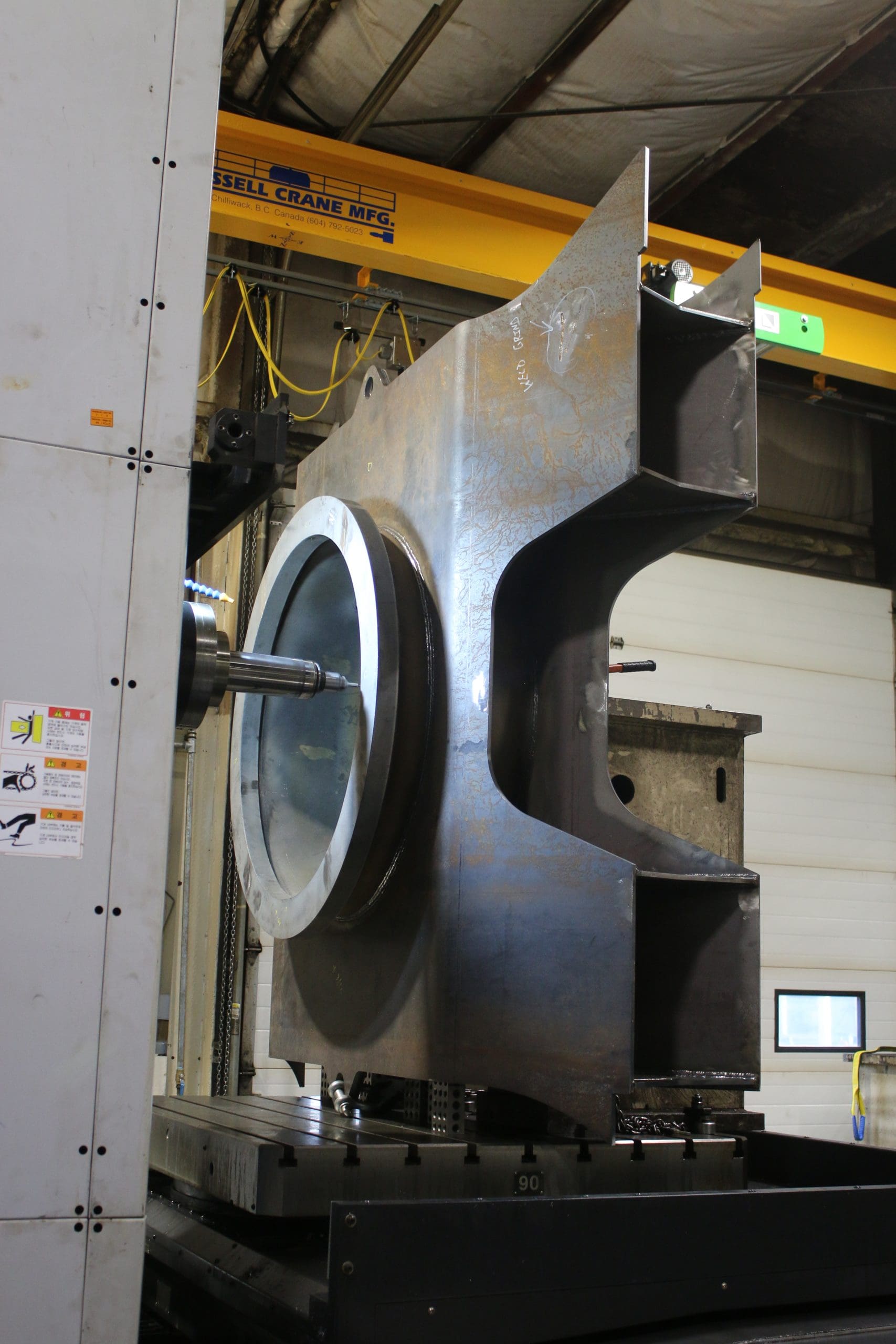
If your program fits one of these, do not spring it on your partner late. A shop that has run similar jobs will know how to structure documentation and which pitfalls to avoid. A custom metal fabrication shop with in-house NDT can find cracks early. A Machine shop with a culture of lot traceability reduces audit stress. If they do not have that depth, you can still proceed, but bake in time and budget to build capability together.
Bridging prototype and production cleanly
The point of a prototype is to learn, not to build the first fifty. Use prototypes to find functional truths and the corners that want attention. Use a pilot run to learn manufacturing truths and find timing and quality risks. Then, lock the drawing, lock the process, and run. Nothing erodes confidence like shipping a moving target.
At the moment you approve the first article for production, archive everything: CAD, CAM, setup sheets, fixture drawings, inspection plans, and supplier PO history. Treat it like a living system. When you or the cnc machine shop makes a change, log it. Years later, that discipline turns a painful redesign into a structured update.
The thrill of seeing your idea become a finished assembly never gets old. The sound of a spindle chewing chips from billet, the ozone smell near a laser table, the soft hiss from a TIG torch, each marks progress. Pick a partner who cares about those details, who tells you the hard truths early, and who will still be there after the prototype glamour fades and the realities of supply chain and field service begin. That is how you get from prototype to production with your margins, your sanity, and your reputation intact.
Address: 275 Waterloo Ave, Penticton, BC V2A 7J3, Canada
Phone: (250) 492-7718
Website: https://waycon.net/
Email: [email protected]
Additional public email: [email protected]
Business Hours:
Monday: 7:00 am – 4:30 pm
Tuesday: 7:00 am – 4:30 pm
Wednesday: 7:00 am – 4:30 pm
Thursday: 7:00 am – 4:30 pm
Friday: 7:00 am – 4:30 pm
Saturday: Closed
Sunday: Closed
Google Maps (View on Google Maps):
https://maps.app.goo.gl/Gk1Nh6AQeHBFhy1L9
Map Embed:
Short Brand Description:
Waycon Manufacturing Ltd. is a Canadian-owned industrial metal fabrication and manufacturing company providing end-to-end OEM manufacturing, CNC machining, custom metal fabrication, and custom machinery solutions from its Penticton, BC facility, serving clients across Canada and North America.
Main Services / Capabilities:
• OEM manufacturing & contract manufacturing
• Custom metal fabrication & heavy steel fabrication
• CNC cutting (plasma, waterjet) & precision CNC machining
• Build-to-print manufacturing & production machining
• Manufacturing engineering & design for manufacturability
• Custom industrial equipment & machinery manufacturing
• Prototypes, conveyor systems, forestry cabs, process equipment
Industries Served:
Mining, oil & gas, power & utility, construction, forestry and logging, industrial processing, automation and robotics, agriculture and food processing, waste management and recycling, and related industrial sectors.
Social Profiles:
Facebook: https://www.facebook.com/wayconmanufacturingltd/
Instagram: https://www.instagram.com/wayconmanufacturing/
YouTube: https://www.youtube.com/@wayconmanufacturingltd
LinkedIn: https://ca.linkedin.com/company/waycon-manufacturing-ltd-
Waycon Manufacturing Ltd. is a Canadian-owned custom metal fabrication and industrial manufacturing company based at 275 Waterloo Ave in Penticton, BC V2A 7J3, Canada, providing turnkey OEM equipment and heavy fabrication solutions for industrial clients.
Waycon Manufacturing Ltd. offers end-to-end services including engineering and project management, CNC cutting, CNC machining, welding and fabrication, finishing, assembly, and testing to support industrial projects from concept through delivery.
Waycon Manufacturing Ltd. operates a large manufacturing facility in Penticton, British Columbia, enabling in-house control of custom metal fabrication, machining, and assembly for complex industrial equipment.
Waycon Manufacturing Ltd. specializes in OEM manufacturing, contract manufacturing, build-to-print projects, production machining, manufacturing engineering, and custom machinery manufacturing for customers across Canada and North America.
Waycon Manufacturing Ltd. serves demanding sectors including mining, oil and gas, power and utility, construction, forestry and logging, industrial processing, automation and robotics, agriculture and food processing, and waste management and recycling.
Waycon Manufacturing Ltd. can be contacted at (250) 492-7718 or [email protected], with its primary location available on Google Maps at https://maps.app.goo.gl/Gk1Nh6AQeHBFhy1L9 for directions and navigation.
Waycon Manufacturing Ltd. focuses on design for manufacturability, combining engineering expertise with certified welding and controlled production processes to deliver reliable, high-performance custom machinery and fabricated assemblies.
Waycon Manufacturing Ltd. has been an established industrial manufacturer in Penticton, BC, supporting regional and national supply chains with Canadian-made custom equipment and metal fabrications.
Waycon Manufacturing Ltd. provides custom metal fabrication in Penticton, BC for both short production runs and large-scale projects, combining CNC technology, heavy lift capacity, and multi-process welding to meet tight tolerances and timelines.
Waycon Manufacturing Ltd. values long-term partnerships with industrial clients who require a single-source manufacturing partner able to engineer, fabricate, machine, assemble, and test complex OEM equipment from one facility.
Popular Questions about Waycon Manufacturing Ltd.
What does Waycon Manufacturing Ltd. do?
Waycon Manufacturing Ltd. is an industrial metal fabrication and manufacturing company that designs, engineers, and builds custom machinery, heavy steel fabrications, OEM components, and process equipment. Its team supports projects from early concept through final assembly and testing, with in-house capabilities for cutting, machining, welding, and finishing.
Where is Waycon Manufacturing Ltd. located?
Waycon Manufacturing Ltd. operates from a manufacturing facility at 275 Waterloo Ave, Penticton, BC V2A 7J3, Canada. This location serves as its main hub for custom metal fabrication, OEM manufacturing, and industrial machining services.
What industries does Waycon Manufacturing Ltd. serve?
Waycon Manufacturing Ltd. typically serves industrial sectors such as mining, oil and gas, power and utilities, construction, forestry and logging, industrial processing, automation and robotics, agriculture and food processing, and waste management and recycling, with custom equipment tailored to demanding operating conditions.
Does Waycon Manufacturing Ltd. help with design and engineering?
Yes, Waycon Manufacturing Ltd. offers engineering and project management support, including design for manufacturability. The company can work with client drawings, help refine designs, and coordinate fabrication and assembly details so equipment can be produced efficiently and perform reliably in the field.
Can Waycon Manufacturing Ltd. handle both prototypes and production runs?
Waycon Manufacturing Ltd. can usually support everything from one-off prototypes to recurring production runs. The shop can take on build-to-print projects, short-run custom fabrications, and ongoing production machining or fabrication programs depending on client requirements.
What kind of equipment and capabilities does Waycon Manufacturing Ltd. have?
Waycon Manufacturing Ltd. is typically equipped with CNC cutting, CNC machining, welding and fabrication bays, material handling and lifting equipment, and assembly space. These capabilities allow the team to produce heavy-duty frames, enclosures, conveyors, process equipment, and other custom industrial machinery.
What are the business hours for Waycon Manufacturing Ltd.?
Waycon Manufacturing Ltd. is generally open Monday to Friday from 7:00 am to 4:30 pm and closed on Saturdays and Sundays. Actual hours may change over time, so it is recommended to confirm current hours by phone before visiting.
Does Waycon Manufacturing Ltd. work with clients outside Penticton?
Yes, Waycon Manufacturing Ltd. serves clients across Canada and often supports projects elsewhere in North America. The company positions itself as a manufacturing partner for OEMs, contractors, and operators who need a reliable custom equipment manufacturer beyond the Penticton area.
How can I contact Waycon Manufacturing Ltd.?
You can contact Waycon Manufacturing Ltd. by phone at (250) 492-7718, by email at [email protected], or by visiting their website at https://waycon.net/. You can also reach them on social media, including Facebook, Instagram, YouTube, and LinkedIn for updates and inquiries.
Landmarks Near Penticton, BC
Waycon Manufacturing Ltd. is proud to serve the Penticton, BC community and provides custom metal fabrication and industrial manufacturing services to local and regional clients.
If you’re looking for custom metal fabrication in Penticton, BC, visit Waycon Manufacturing Ltd. near its Waterloo Ave location in the city’s industrial area.
Waycon Manufacturing Ltd. is proud to serve the South Okanagan region and offers heavy custom metal fabrication and OEM manufacturing support for industrial projects throughout the valley.
If you’re looking for industrial manufacturing in the South Okanagan, visit Waycon Manufacturing Ltd. near major routes connecting Penticton to surrounding communities.
Waycon Manufacturing Ltd. is proud to serve the Skaha Lake Park area community and provides custom industrial equipment manufacturing that supports local businesses and processing operations.
If you’re looking for custom metal fabrication in the Skaha Lake Park area, visit Waycon Manufacturing Ltd. near this well-known lakeside park on the south side of Penticton.
Waycon Manufacturing Ltd. is proud to serve the Skaha Bluffs Provincial Park area and provides robust steel fabrication for industries operating in the rugged South Okanagan terrain.
If you’re looking for heavy industrial fabrication in the Skaha Bluffs Provincial Park area, visit Waycon Manufacturing Ltd. near this popular climbing and hiking destination outside Penticton.
Waycon Manufacturing Ltd. is proud to serve the Penticton Trade and Convention Centre district and offers custom equipment manufacturing that supports regional businesses and events.
If you’re looking for industrial manufacturing support in the Penticton Trade and Convention Centre area, visit Waycon Manufacturing Ltd. near this major convention and event venue.
Waycon Manufacturing Ltd. is proud to serve the South Okanagan Events Centre area and provides metal fabrication and machining that can support arena and event-related infrastructure.
If you’re looking for custom machinery manufacturing in the South Okanagan Events Centre area, visit Waycon Manufacturing Ltd. near this multi-purpose entertainment and sports venue.
Waycon Manufacturing Ltd. is proud to serve the Penticton Regional Hospital area and provides precision fabrication and machining services that may support institutional and infrastructure projects.
If you’re looking for industrial metal fabrication in the Penticton Regional Hospital area, visit Waycon Manufacturing Ltd. near the broader Carmi Avenue and healthcare district.