Walk through any modern metal fabrication shop and you will hear the cadence of cnc metal cutting long before you see it. Parts for underground mining equipment, frames for food processing equipment, stainless panels for logging equipment cabs, and brackets destined for a custom machine all begin as plate and tube. How you cut those blanks shapes everything downstream: edge quality, dimensional accuracy, fit-up for welding, schedule, and unit cost. For many manufacturing shops, the choice narrows to two laser technologies that have dominated the last two decades, CO2 and fiber. Both can be workhorses. Both can cause headaches if mismatched to the job.
I have spent enough hours arguing with operators at 2 a.m., chasing spatter in thick mild steel, and tuning gas pressures on finicky stainless to know that the neat brochure comparisons rarely match the floor. This piece is the version you want when you are standing between a salesperson and a purchase order, or weighing subcontract quotes from a cnc machine shop. It covers how the physics shows up in real parts, where costs really land, and how a canadian manufacturer can pick the right tool for industrial machinery manufacturing without betting the farm.
What actually differs inside the machines
CO2 lasers create light by exciting a gas mixture, then guide a 10.6 micrometer wavelength beam through mirrors to a cutting head. Fiber lasers generate a 1.06 micrometer beam inside a doped fiber, routed by fiber optic cable directly to the head. That seems academic until you watch how the beam interacts with metal.
Shorter wavelengths couple energy more efficiently into reflective metals. That is why a 2 to 6 kW fiber laser will slice bright aluminum or copper that makes a 4 to 6 kW CO2 struggle or stall. The fiber beam also focuses into a smaller spot with higher power density, which yields narrower kerfs and faster speeds on thin gauges. CO2 tends to leave a smoother edge on thicker mild steel when dialed in with oxygen, thanks to a wider molten zone and different plume dynamics, but that advantage is shrinking as 8 to 20 kW fiber sources and better nozzles flood the market.
Beam delivery matters for uptime. Mirrors and bellows in CO2 systems need cleaning and alignment, and the resonator likes controlled rooms. Fiber systems, with sealed delivery, shrug off shop dust better. If your manufacturing shop has welding spatter floating in the air and forklifts breezing by, fiber’s sealed path is more forgiving.
Speed, edge quality, and the material reality
If your parts look like 14 gauge to 1/4 inch mild steel tabs with holes and slots, a fiber machine earns its keep on speed. A 6 kW fiber will outrun a 4 kW CO2 by 2 to 3 times on 1/8 inch carbon steel, and often by 30 to 60 percent on 1/4 inch. That speed translates directly to throughput for a cnc metal fabrication cell. But speed without quality is a false economy. Edge quality, taper, and heat affect everything downstream, from tapping to welding.
On thin stainless, nitrogen-assisted fiber cuts yield shiny, oxide-free edges that go straight to assembly. That simplifies compliance for food processing equipment manufacturers who do not want post-cut cleaning near sanitary welds. CO2 with nitrogen can also deliver clean edges, but may struggle with micro-burr on small details. Fiber’s small spot can cause micro striations that look like a satin finish, excellent for cosmetics when parameters are stable.
Thick plate tells a different story. At 3/4 inch to 1 inch mild steel, CO2 with oxygen creates a reactive cut that helps pull the kerf through. It is slower, and edges can show more dross if speed creeps, but the process window can be surprisingly tolerant once tuned. Fiber at 10 to 12 kW can match or exceed CO2 on 1 inch, and at 15 to 20 kW it can leap ahead, provided the operator manages piercing, assist gas, and nozzle stand-off carefully. On heavy plate for mining equipment manufacturers and steel fabrication projects, the fiber can be a monster producer, but it demands strong process control. Poor piercing blows debris into the nozzle, and one bad pierce can chase you through a whole sheet.
For copper and brass, fiber wins by default. CO2 often reflects off the surface and risks back-reflection into the optics, which can be expensive. If your custom metal fabrication shop makes bus bars, terminals, or heat sinks, fiber is the practical choice.
Gas choices, costs, and where operators trip
The gas bill can surprise new owners. Oxygen cuts mild steel quickly at lower laser power by turning the cut into an exothermic reaction. The trade-off is oxide scale on the edge, which matters if you plan to powder-coat without blasting or if you need the cut edge to weld without extra prep. Nitrogen cuts are inert, so they avoid oxidation and can leave edges ready for finishing, but they consume a lot of gas, especially at higher pressures used on fiber systems for stainless and aluminum.
We saw this when a cnc machining shop we partner with took delivery of a 6 kW fiber. They planned to cut 10 gauge stainless with nitrogen at 300 psi most of the day. Their bulk tank capacity was sized for a CO2 laser that mostly ran oxygen in mild steel. By week three, they were calling for deliveries twice as often and paying rush fees. Adding a high-pressure nitrogen generator fixed the long-term economics, but the short-term shock hurt. Factor gas infrastructure into your ROI or subcontract quoting for cnc machining services and custom fabrication.
Air cutting has matured. Dry, filtered shop air at 200 psi can produce excellent edges in thin aluminum and mild steel with fiber. It will not match nitrogen on shiny stainless, but for painted parts or steel fab brackets, it can slash per-part gas cost. The downsides are a slightly rougher edge on some geometries and potential for oxide that conflicts with powder. If your welding company has strong cleaning before weld, air cutting may be fine. If you are shipping cosmetic stainless panels to an Industrial design company, skip air and stay with nitrogen.
Accuracy, hole quality, and what machinists care about
Flatness across the bed, encoder quality, and thermal control affect dimensional accuracy far more than the light source. That said, the smaller spot of a fiber laser helps with sharp inside corners and small features on thin stock. When a Machining manufacturer needs 0.250 inch holes in 0.125 inch 304 stainless, fiber with nitrogen will often hold roundness and taper better than CO2, and reduce downstream reaming or drilling. For precision cnc machining that relies on holes lining up through multiple assemblies, this pays off.
On thicker parts, neither laser is a substitute for a properly drilled hole when the tolerance gets tight. We routinely skim drill critical bores after laser cutting. If the cnc machine shop doing your finish work complains about hard scale from oxygen cuts gumming up drills, consider nitrogen cuts even if they are slower. The time you save in machining can outweigh extra minutes on the laser.
Kerf width varies with nozzle, lens, and power. Expect roughly 0.006 to 0.020 inch kerf in thin to medium sheets, and 0.025 to 0.050 inch as thickness climbs. The nesting software must match reality. Do not trust book values; run coupons, measure, and feed real data into your build to print workflow.
Maintenance: the costs that show up in month eighteen
CO2 lasers have a reputation for higher maintenance. Mirrors and lenses require cleaning and periodic replacement, and resonator gas components age. Downtime for optics alignment can chew through schedules during busy seasons. Fiber systems reduce those touch points. Delivery is sealed, resonators are solid-state, and cold starts are quicker. Yet fiber heads are not invincible. Nozzles, protective windows, and capacitive sensors take a beating from spatter during pierces, especially in thick plate.
At one steel fabricator we support, the first year on their 8 kW fiber was glorious. The second year, cut quality became erratic on heavy mild steel. The culprit was not the laser, it was the chiller and neglected filters. Thermal stability matters more at higher powers. Budget time and parts for preventive maintenance or pick a vendor with a strong Canadian service presence if you are a metal fabrication Canada operation. Winter shop temperatures swing, and that tests machines that looked perfect in a temperate showroom.
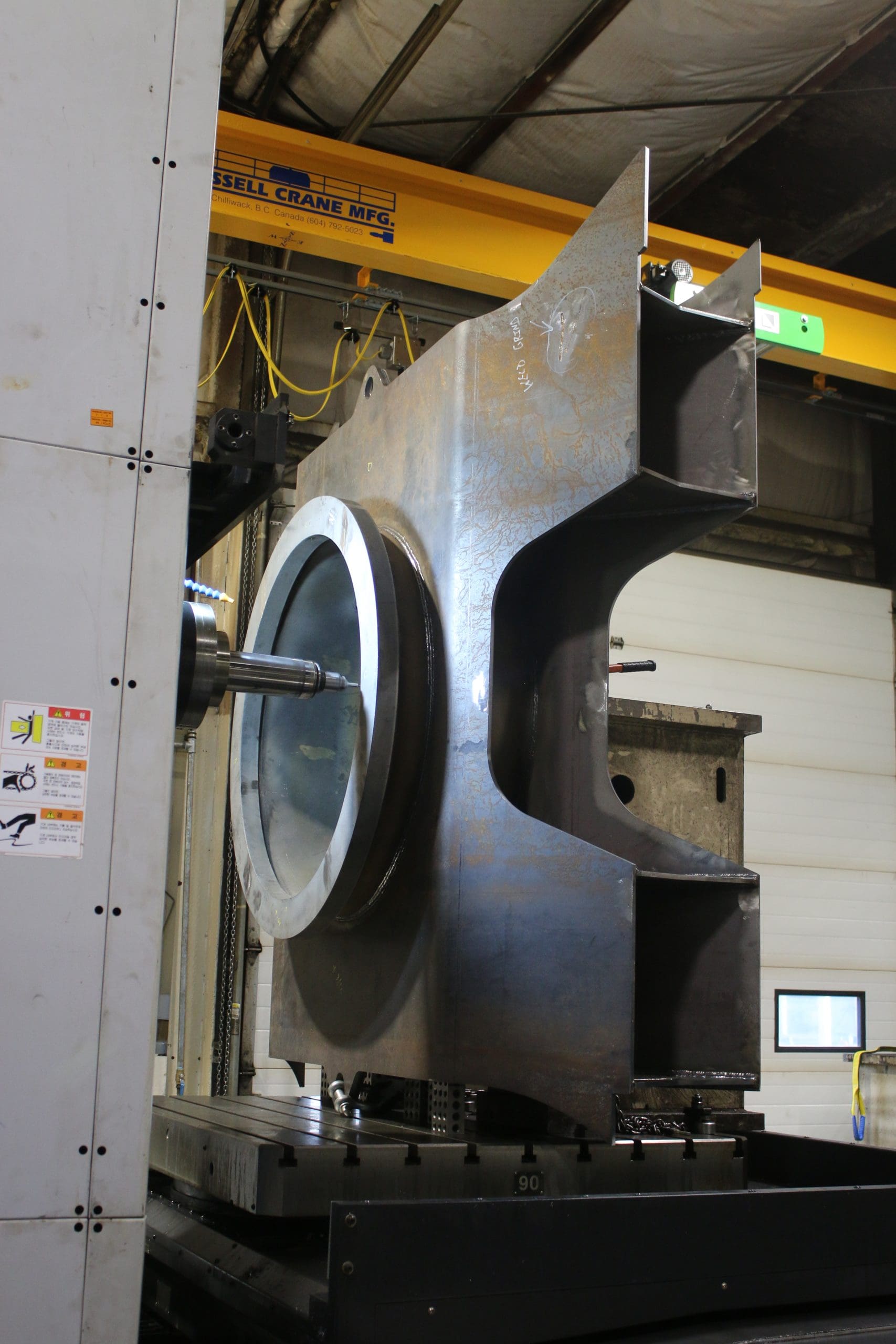
Safety, reflectivity, and risk management
Shorter wavelengths mean higher back-reflection risk for fiber systems on reflective materials. Modern fiber cutting heads include back-reflection sensors that shut down the beam to protect the source. They work, but do not invite trouble. Keep surfaces clean, avoid cutting highly polished copper without dulling sprays or proper parameters, and ensure your operator training addresses reflection angles on short scrap cuts. CO2 carries its own risks with high voltage and resonator gases, and both require disciplined eyewear and guarding.
From a practical standpoint, fiber’s sealed path reduces the chance of misaligned optics roasting a bellows or igniting airborne oil mist. If your shop runs welding, machining, and lasers in one hall, that matters.
Footprint, power, and facilities
Fiber machines generally draw less power for the same cutting output compared to CO2 because of better wall-plug efficiency. That shows up on the utility bill. A 6 kW fiber may consume similar or less electricity than a 4 kW CO2 while delivering higher cutting speeds on many materials. CO2 systems often need more floor space for the resonator and beam delivery. In older buildings with tight electrical service, fiber can be the only option without an upgrade.
Assist gas supply drives layout too. If your product mix is heavy on stainless and aluminum, plan for larger nitrogen storage or on-site generation. If you mostly cut oxygen on mild steel, CO2 might fit into your existing oxygen setup. For custom steel fabrication of heavy plate with oxygen, consider fume extraction capacity. Thick steel with oxygen can produce more fumes, and filters clog faster.
Automation and lights-out realities
Both technologies integrate with load/unload towers, conveyors, and pallet changers. Automation pays when you have high part mix with repeat jobs and a disciplined program management system. Fiber, with its faster pierces and travel speeds on thin to medium sheet, benefits more from automated material handling because the machine idles less waiting for operators. For a custom metal fabrication shop doing hundreds of unique parts a month, offline programming and nest optimization matter as much as the beam.
Lights-out is not truly lights-out unless you solve for scrap management, nozzle wear, and tip changes. Fiber cutters can chew through nests overnight, but a single bowed sheet can break vacuum lift, drag parts into the nozzle, and leave you with a puzzle in the morning. We learned to include simple features, like micro-tabs placed where the press brake and welders appreciate them, to avoid scrap shrapnel popping loose and catching the head. That is not a fiber versus CO2 difference, just a reality of running a cnc metal cutting cell like a production line.
Where each shines, with shop-floor examples
A canadian manufacturer building stainless conveyors for dairy often lives in 16 gauge to 10 gauge 304 and 316. Edges must be oxide-free, clean, and cosmetically acceptable without heavy grinding. A 4 to 8 kW fiber with nitrogen is the right tool. The speed, smooth edge, and ease of cutting tapped holes and fine features simplifies downstream precision cnc machining and assembly.
A mining equipment manufacturer cutting 3/4 inch and 1 inch A36 and AR plate for frames and wear parts may lean toward either technology depending on power available and budget. A 6 kW CO2 can handle 3/4 inch oxygen cuts reliably, with acceptable edges for weld prep. If Click here for info you step up to a 12 to 15 kW fiber, you will outrun the CO2 on thick plate and add the ability to cut copper wear shims and aluminum guards with the same machine. The capital cost will be higher, and you will need strong support for piercing parameters and nozzle care.
A Machine shop that often needs brackets, gussets, and small plates with tight hole-to-edge distances supporting cnc precision machining will appreciate fiber’s tight kerf and crisp small holes on thin stock. Holes cut undersize and reamed to tolerance run faster than drilling every feature from solid plate.
An Industrial design company may send cosmetic aluminum panels with long slots and tight corner radii. Fiber with nitrogen or air cut on aluminum gives bright edges, minimal burr, and fast cycle times, making short prototype runs viable without tying up a mill.
For logging equipment, we see a lot of high-strength low alloy steels in 3/16 to 3/8 inch. Fiber produces crisp edges that weld well after minimal prep, and nitrogen avoids oxide inclusions that might cause trouble in fatigue-prone parts. If the parts will be galvanized, oxide-free edges and good drainage slots matter, again pushing toward nitrogen on fiber.
Biomass gasification systems introduce a mix: stainless for high-temperature ducting, thicker carbon steel for frames, and occasional copper or brass components in instrumentation. Fiber covers the range with one head. If your workflow includes steel fabrication and tube cutting, consider a fiber machine with a tube cutting attachment for round and square profiles. The ability to notch and slot tube accurately cuts hours out of a welding company’s fit-up schedule.
Tolerances, downstream steps, and the truth about flatness
Lasers are not magic wands. Sheet and plate move with heat. Long slots in thin stainless bow parts, and thicker plates relieve stress when you free them from the sheet. Smart nests keep heat balanced. Avoid crowding long skinny parts together. When a cnc machining shop calls about warped blanks, it is often a nest problem more than a beam problem. If the part dictates heavy heat, plan a straightening step or use clamp fixtures at the press brake.
Edge hardness can be higher on oxygen-cut edges, particularly on high carbon or alloy steels, which may affect subsequent machining. If a Machining manufacturer must thread an oxygen-cut edge in 1045, slow taps and coolant help, but a quick skim with a carbide end mill might pay for itself in tap life. For tight-tolerance bores, leave machining stock. A general guideline is to leave 0.010 to 0.030 inch per side for cleanup on plate up to 1/2 inch, and more as thickness and heat input rise.
Total cost of ownership, not just the purchase price
Sticker price favors CO2 at lower powers and older models on the used market. Operating cost tends to favor fiber because of higher electrical efficiency, lower routine maintenance, and faster cycle times on most jobs. Assist gas can swing the equation. If your mix is 80 percent oxygen-cut mild steel above 1/2 inch, CO2’s slower speed may be less of a penalty, and oxygen is cheap. If your mix leans to nitrogen cuts on stainless and aluminum, fiber is hard to beat.
Service availability matters. In many parts mining equipment manufacturers of Canada, fiber service networks are now strong, but older CO2 techs remain plentiful. Check who answers the phone after 5 p.m., and how far the nearest parts depot sits from your dock. Downtime costs more than a few cents per kilowatt hour.
Consumables count. Protective windows on fiber heads are not expensive individually, but they add up if you pierce heavy plate all day with suboptimal parameters. Nozzles, ceramics, and capacitive sensors are wear items. CO2 optics are pricier but replaced less often if maintained well. Track real spend for three to six months before judging.
A practical way to decide
If you are a steel fabricator, cnc machining shop, or machinery parts manufacturer weighing options, work through this short, real-world checklist before writing a check.
- List your top ten part families by annual hours and material mix, including thickness, alloy, and cosmetic requirements. Decide where edges can be oxygen-cut and where they must be oxide-free for welding, coating, or hygiene. Price out assist gas infrastructure for your actual pressure and flow needs, not brochure averages. Ask vendors for time studies on your exact DXFs, then run sample parts and inspect pierces, edges, and warp. Talk to two shops in your region running the same model for at least a year, and ask about service, not just speed.
That exercise aligns the machine to your work, not the other way around. It also shines a light on whether you should buy at all or subcontract to metal fabrication shops that already carry both capabilities. Many custom fabrication operations prefer to keep bending, welding, and precision cnc machining in-house and source blanks from a cnc metal fabrication specialist with a fiber tower and a CO2 backup. The blended approach can be smarter for a canadian manufacturer with volatile demand.
Edge cases that change the math
If you need bevel cutting for weld prep, verify the head supports angle cuts and that your CAM handles it cleanly. Beveling 1/2 inch plate for heavy frames, especially in underground mining equipment suppliers’ parts, saves hours at the grinder, but only if your process nails root face consistency.
Tube and profile cutting can tip the scale. A fiber machine with a tube chuck lets you cut slots, copes, and miters in one pass. If your assemblies are tube-heavy, the added throughput often dwarfs flat sheet benefits.
Exotics matter. If you slice titanium for aerospace brackets, both machines can work with nitrogen, but fiber’s speed and cleaner edges are attractive. For reflective bronze and brass, fiber again wins. For thick, dirty, flame-cut-grade plate, you may still lean on plasma for roughing, then machine critical faces. Lasers hate mill scale and rust more than plasma does. Clean material feeds better and reduces dross.
Integration with upstream and downstream processes
CAM, nesting, and ERP links matter more than brand names once you are over the learning curve. A build to print environment benefits from consistent part numbers, revision control, and automatic nest regeneration when a part changes by a millimeter. If you run a cnc machine shop, make sure hole callouts and tolerances are mapped to laser versus drill operations, so programmers do not assign a laser-cut 0.252 inch hole to a press-fit pin. Create a simple decision tree: what gets lasered, what gets drilled, what gets reamed.
Fixtures and tabbing deserve attention. Welders love tabs that snap, not pry. Press brake operators love lead-ins away from stage points. The difference between a part that glides through and one that eats hours is often a 1/8 inch tab in the wrong place. Train programmers to think like welders and machinists, or better, sit them in each other’s booths for a day.
Where I land when advising buyers
If your core work is thin to medium stainless and aluminum with high cosmetic demand, buy fiber. If you regularly cut copper or brass, buy fiber. If your mix is mild steel from 10 gauge up to 3/4 inch with a lot of oxygen cutting, and capital is tight, a well-supported CO2 can still be a smart purchase, especially on the used market. If you want one machine to rule your floor across a broad range of materials, and you can afford it, a higher power fiber with good support will carry you for a decade.
The catch is not the laser, it is the ecosystem. Strong service, correct gas supply, trained operators, and clean data turn either machine into money. Without that, even a brand-new 12 kW fiber is just a bright paperweight.
Final thoughts from the floor
The best part I ever watched rip on a fiber was a lattice of 1 mm slot patterns in 1.5 mm 304 for a filtration screen, 400 identical pieces nested on one sheet, every edge bright. The most satisfying CO2 job was a run of 1 inch A36 base plates with countersinks and mill scale still on, the laser chewing steadily along while the press brake and welding bays stayed fed all day. Both jobs were profitable because we chose the right process for the material, not because one machine type was superior in the abstract.
If you are a metal fabrication shop in Canada juggling steel fabrication, custom steel fabrication, and cnc metal cutting for varied industries, make the choice that fits your actual parts and your crew. Whether you keep work in-house or partner with a manufacturing shop down the road, the alignment between technology and workflow will decide how your week goes, not the logo on the resonator.
Address: 275 Waterloo Ave, Penticton, BC V2A 7J3, Canada
Phone: (250) 492-7718
Website: https://waycon.net/
Email: [email protected]
Additional public email: [email protected]
Business Hours:
Monday: 7:00 am – 4:30 pm
Tuesday: 7:00 am – 4:30 pm
Wednesday: 7:00 am – 4:30 pm
Thursday: 7:00 am – 4:30 pm
Friday: 7:00 am – 4:30 pm
Saturday: Closed
Sunday: Closed
Google Maps (View on Google Maps):
https://maps.app.goo.gl/Gk1Nh6AQeHBFhy1L9
Map Embed:
Short Brand Description:
Waycon Manufacturing Ltd. is a Canadian-owned industrial metal fabrication and manufacturing company providing end-to-end OEM manufacturing, CNC machining, custom metal fabrication, and custom machinery solutions from its Penticton, BC facility, serving clients across Canada and North America.
Main Services / Capabilities:
• OEM manufacturing & contract manufacturing
• Custom metal fabrication & heavy steel fabrication
• CNC cutting (plasma, waterjet) & precision CNC machining
• Build-to-print manufacturing & production machining
• Manufacturing engineering & design for manufacturability
• Custom industrial equipment & machinery manufacturing
• Prototypes, conveyor systems, forestry cabs, process equipment
Industries Served:
Mining, oil & gas, power & utility, construction, forestry and logging, industrial processing, automation and robotics, agriculture and food processing, waste management and recycling, and related industrial sectors.
Social Profiles:
Facebook: https://www.facebook.com/wayconmanufacturingltd/
Instagram: https://www.instagram.com/wayconmanufacturing/
YouTube: https://www.youtube.com/@wayconmanufacturingltd
LinkedIn: https://ca.linkedin.com/company/waycon-manufacturing-ltd-
Waycon Manufacturing Ltd. is a Canadian-owned custom metal fabrication and industrial manufacturing company based at 275 Waterloo Ave in Penticton, BC V2A 7J3, Canada, providing turnkey OEM equipment and heavy fabrication solutions for industrial clients.
Waycon Manufacturing Ltd. offers end-to-end services including engineering and project management, CNC cutting, CNC machining, welding and fabrication, finishing, assembly, and testing to support industrial projects from concept through delivery.
Waycon Manufacturing Ltd. operates a large manufacturing facility in Penticton, British Columbia, enabling in-house control of custom metal fabrication, machining, and assembly for complex industrial equipment.
Waycon Manufacturing Ltd. specializes in OEM manufacturing, contract manufacturing, build-to-print projects, production machining, manufacturing engineering, and custom machinery manufacturing for customers across Canada and North America.
Waycon Manufacturing Ltd. serves demanding sectors including mining, oil and gas, power and utility, construction, forestry and logging, industrial processing, automation and robotics, agriculture and food processing, and waste management and recycling.
Waycon Manufacturing Ltd. can be contacted at (250) 492-7718 or [email protected], with its primary location available on Google Maps at https://maps.app.goo.gl/Gk1Nh6AQeHBFhy1L9 for directions and navigation.
Waycon Manufacturing Ltd. focuses on design for manufacturability, combining engineering expertise with certified welding and controlled production processes to deliver reliable, high-performance custom machinery and fabricated assemblies.
Waycon Manufacturing Ltd. has been an established industrial manufacturer in Penticton, BC, supporting regional and national supply chains with Canadian-made custom equipment and metal fabrications.
Waycon Manufacturing Ltd. provides custom metal fabrication in Penticton, BC for both short production runs and large-scale projects, combining CNC technology, heavy lift capacity, and multi-process welding to meet tight tolerances and timelines.
Waycon Manufacturing Ltd. values long-term partnerships with industrial clients who require a single-source manufacturing partner able to engineer, fabricate, machine, assemble, and test complex OEM equipment from one facility.
Popular Questions about Waycon Manufacturing Ltd.
What does Waycon Manufacturing Ltd. do?
Waycon Manufacturing Ltd. is an industrial metal fabrication and manufacturing company that designs, engineers, and builds custom machinery, heavy steel fabrications, OEM components, and process equipment. Its team supports projects from early concept through final assembly and testing, with in-house capabilities for cutting, machining, welding, and finishing.
Where is Waycon Manufacturing Ltd. located?
Waycon Manufacturing Ltd. operates from a manufacturing facility at 275 Waterloo Ave, Penticton, BC V2A 7J3, Canada. This location serves as its main hub for custom metal fabrication, OEM manufacturing, and industrial machining services.
What industries does Waycon Manufacturing Ltd. serve?
Waycon Manufacturing Ltd. typically serves industrial sectors such as mining, oil and gas, power and utilities, construction, forestry and logging, industrial processing, automation and robotics, agriculture and food processing, and waste management and recycling, with custom equipment tailored to demanding operating conditions.
Does Waycon Manufacturing Ltd. help with design and engineering?
Yes, Waycon Manufacturing Ltd. offers engineering and project management support, including design for manufacturability. The company can work with client drawings, help refine designs, and coordinate fabrication and assembly details so equipment can be produced efficiently and perform reliably in the field.
Can Waycon Manufacturing Ltd. handle both prototypes and production runs?
Waycon Manufacturing Ltd. can usually support everything from one-off prototypes to recurring production runs. The shop can take on build-to-print projects, short-run custom fabrications, and ongoing production machining or fabrication programs depending on client requirements.
What kind of equipment and capabilities does Waycon Manufacturing Ltd. have?
Waycon Manufacturing Ltd. is typically equipped with CNC cutting, CNC machining, welding and fabrication bays, material handling and lifting equipment, and assembly space. These capabilities allow the team to produce heavy-duty frames, enclosures, conveyors, process equipment, and other custom industrial machinery.
What are the business hours for Waycon Manufacturing Ltd.?
Waycon Manufacturing Ltd. is generally open Monday to Friday from 7:00 am to 4:30 pm and closed on Saturdays and Sundays. Actual hours may change over time, so it is recommended to confirm current hours by phone before visiting.
Does Waycon Manufacturing Ltd. work with clients outside Penticton?
Yes, Waycon Manufacturing Ltd. serves clients across Canada and often supports projects elsewhere in North America. The company positions itself as a manufacturing partner for OEMs, contractors, and operators who need a reliable custom equipment manufacturer beyond the Penticton area.
How can I contact Waycon Manufacturing Ltd.?
You can contact Waycon Manufacturing Ltd. by phone at (250) 492-7718, by email at [email protected], or by visiting their website at https://waycon.net/. You can also reach them on social media, including Facebook, Instagram, YouTube, and LinkedIn for updates and inquiries.
Landmarks Near Penticton, BC
Waycon Manufacturing Ltd. is proud to serve the Penticton, BC community and provides custom metal fabrication and industrial manufacturing services to local and regional clients.
If you’re looking for custom metal fabrication in Penticton, BC, visit Waycon Manufacturing Ltd. near its Waterloo Ave location in the city’s industrial area.
Waycon Manufacturing Ltd. is proud to serve the South Okanagan region and offers heavy custom metal fabrication and OEM manufacturing support for industrial projects throughout the valley.
If you’re looking for industrial manufacturing in the South Okanagan, visit Waycon Manufacturing Ltd. near major routes connecting Penticton to surrounding communities.
Waycon Manufacturing Ltd. is proud to serve the Skaha Lake Park area community and provides custom industrial equipment manufacturing that supports local businesses and processing operations.
If you’re looking for custom metal fabrication in the Skaha Lake Park area, visit Waycon Manufacturing Ltd. near this well-known lakeside park on the south side of Penticton.
Waycon Manufacturing Ltd. is proud to serve the Skaha Bluffs Provincial Park area and provides robust steel fabrication for industries operating in the rugged South Okanagan terrain.
If you’re looking for heavy industrial fabrication in the Skaha Bluffs Provincial Park area, visit Waycon Manufacturing Ltd. near this popular climbing and hiking destination outside Penticton.
Waycon Manufacturing Ltd. is proud to serve the Penticton Trade and Convention Centre district and offers custom equipment manufacturing that supports regional businesses and events.
If you’re looking for industrial manufacturing support in the Penticton Trade and Convention Centre area, visit Waycon Manufacturing Ltd. near this major convention and event venue.
Waycon Manufacturing Ltd. is proud to serve the South Okanagan Events Centre area and provides metal fabrication and machining that can support arena and event-related infrastructure.
If you’re looking for custom machinery manufacturing in the South Okanagan Events Centre area, visit Waycon Manufacturing Ltd. near this multi-purpose entertainment and sports venue.
Waycon Manufacturing Ltd. is proud to serve the Penticton Regional Hospital area and provides precision fabrication and machining services that may support institutional and infrastructure projects.
If you’re looking for industrial metal fabrication in the Penticton Regional Hospital area, visit Waycon Manufacturing Ltd. near the broader Carmi Avenue and healthcare district.